
Table of Contents
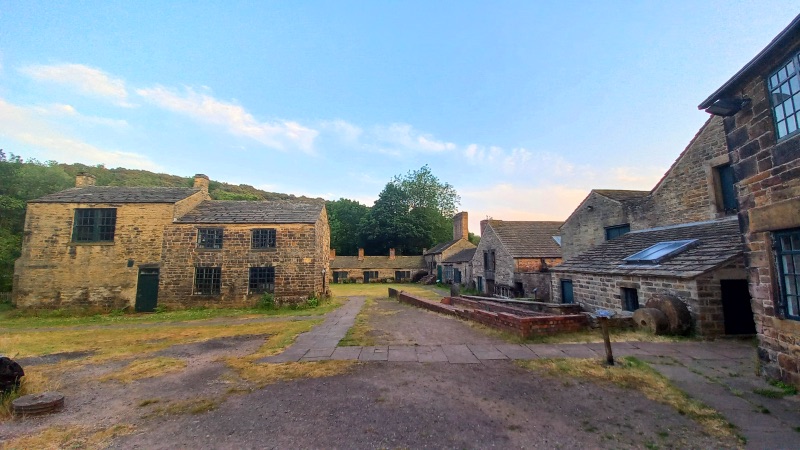
In this article, we’re going to tell you everything you need to know to plan a trip to the Abbeydale Industrial Hamlet in Sheffield in 2025. The Abbeydale Industrial Hamlet is an original steelwork site based in Sheffield, and it is one of the best fully preserved sites in the world. This Hamlet is over 800 years old, and many of the original buildings, machines, and tools are still preserved and kept at the site.
We absolutely love the Abbeydale Industrial Hamlet and have visited many times. We are from Sheffield and also love to geek up on some history and science. So we wanted to pack this guide with information to help parents and teachers to prepare for their visit.
We particularly recommend this as an activity for families with children, especially if you’re looking for free educational things to do in Sheffield. We hope that this article can be used as an educational resource to help contextualize and enrich the learning.
Abbeydale Industrial Hamlet in brief
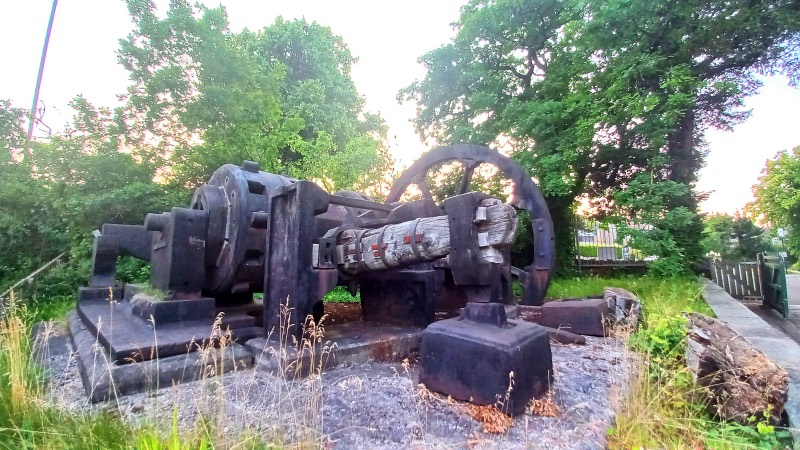
At the Abbeydale Industrial Hamlet you can follow the entire steel-making process from raw materials (cast iron) to finished products (steel tools). Many of the original tools, fire pits, buildings and machines are in good condition and open to explore. You can learn about the technology & science behind the production of steel tools. You can also learn about the history, economics, culture and lives of the steel workers.
This is an amazing place to connect with the fascinating culture and history of Sheffield. In our opinion this is one of the best free things to do in Sheffield. It is worth noting that the machines themselves are not operational. However, from time to time you can see demonstrations at the Abbeydale Industrial Hamlet. These normally show parts of the process such as blacksmith demonstrations.
The Abbeydale Industrial Hamlet is part of the Sheffield Museums Trust
Where is the Abbeydale Industrial Hamlet located?
The Abbeydale Industrial Hamlet is located in the South of Sheffield. It is in the Abbeydale Valley, in the Beauchief area, close to Millhouses park and Ecclesall Woods.
Address: Abbeydale Rd S, Beauchief, Sheffield S7 2QW
Opening times at the Hamlet: Thursday – Saturday 10am – 4pm and Sunday 11am – 4pm (CLOSED Monday – Wednesday)
Cafe (Joni) Opening times: Monday – Friday 9am – 5pm
How much does it cost to visit the Abbeydale Industrial Hamlet?
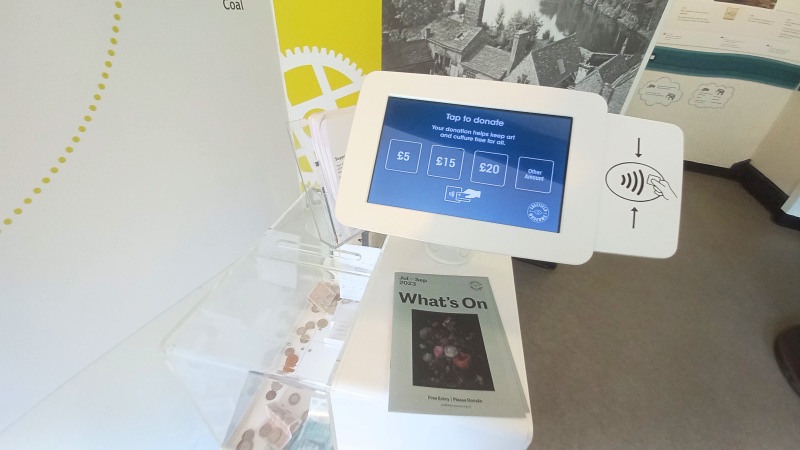
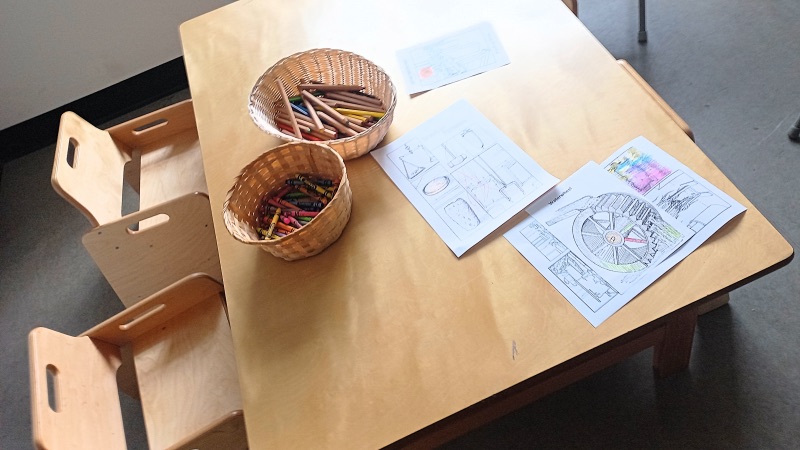
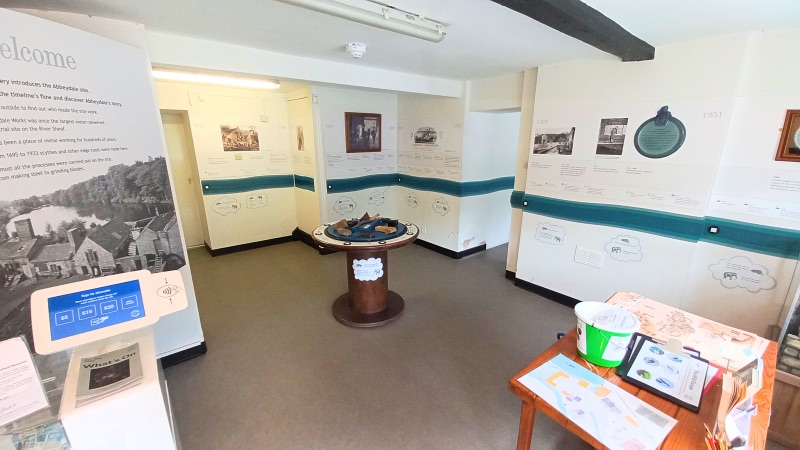
It is FREE of charge to visit the Abbeydale Industrial Hamlet; however, you can make a donation in the exhibition area (which is the building to the right at the main entrance to the Hamlet). In the Exhibition Centre, you can also look at displays, original pictures, tools, and watch a video that introduces the Hamlet and helps you understand the production process step by step. There is also an area for children to do coloring in.
TOP TIP: If you arrive in rainy weather there are also some free umbrellas available to borrow at the Exhibition Centre.
How long should you allow to visit the Hamlet?
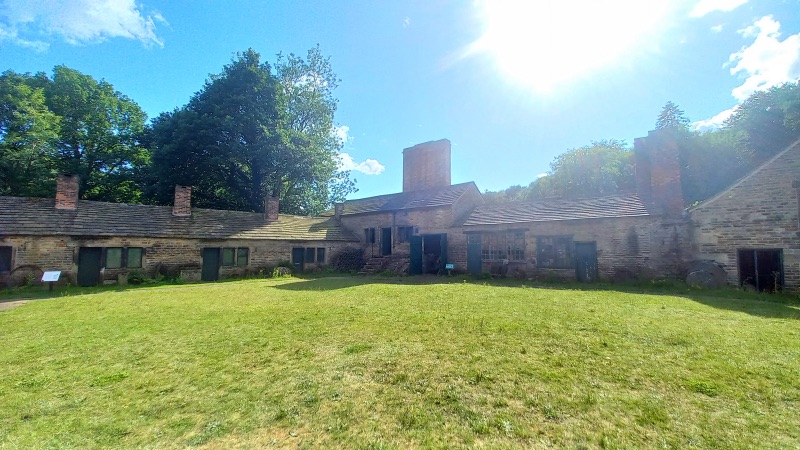
The Abbeydale Industrial Hamlet is a relatively small attraction with lots of things to see close together. We recommend allowing around 1 – 2 hours to explore the Hamlet itself. If you are staying for lunch at the cafe allow another 1 hour. If you are doing some educational activities or classes we recommend allowing longer.
How do you get to the Abbeydale Industrial Hamlet?
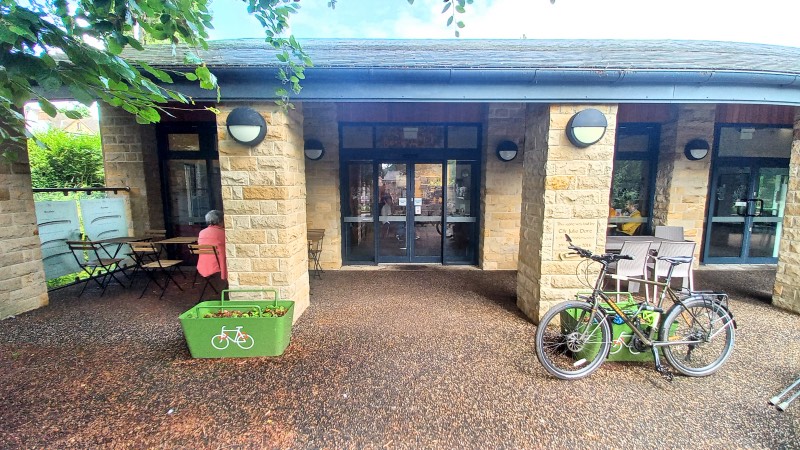
There are several ways to get to the Hamlet. The best method of transport depends on your own specific needs and requirements:
1 Cycle
If you’re planning to get to the Hamlet by bicycle there are some bike locks attached to the plant pots at the front of the cafe. This is a good safe place to leave your bike. Take care cycling on Sheffield roads; the roads can be busy and there are only a few bike lanes.
2 Take a bus
You can get to the Abbeydale Industrial Hamlet by bus. The number 97, 98 and 218 all run along Abbeydale road past the Mini Railway site. Buses in Sheffield generally cost £2 – £5 depending on the ticket type and distance.
3 Drive
There are several ways to get to the Abbeydale Industrial Hamlet most people visiting the Hamlet choose to drive. The Hamlet is located to the left side of Abbeydale road (if you are coming from town) just past the Abbey Lane Junction. The entrance is clearly signed and you drive straight into a small car park.
What is parking like at the Abbeydale Industrial Hamlet?
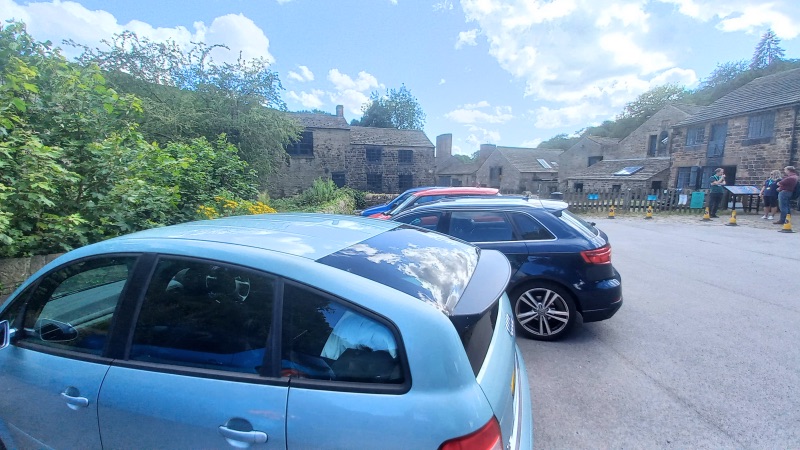
There is a small free car park located at the Abbeydale Industrial Hamlet. Unfortunately, this car park does not have a very large capacity and can fill up when the Hamlet is busy. In front of the cafe, there are also a few parking spaces reserved for disabled visitors and families with young children.
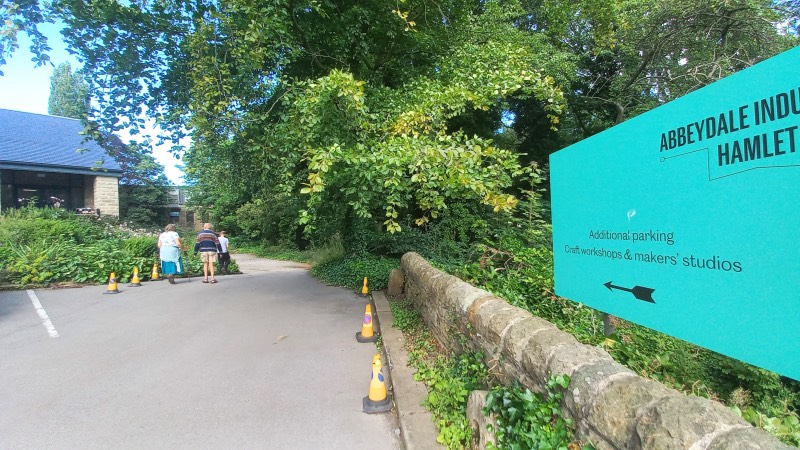
There is an overflow car park behind the cafe. Generally, people are not aware of this area, so there are normally some spaces available. Alternatively, if the car park is full, you can keep driving further South along Abbeydale Road, and you will see some small roads into residential areas. It is possible to park for free in these areas without restrictions; just be careful not to block any driveways.
TOP TIPS for visiting the Abbeydale Industrial Hamlet

Here are a few top tips to help you plan an amazing trip to the Hamlet:
- Arrive early: If possible aim for opening time to get a good parking place and arrive before it gets busy. Note the opening times. Thursday – Saturday 10am – 5pm and Sunday 11am – 4pm
- If the parking is full, park behind the cafe or on a nearby residential street.
- Visit the buildings in the correct order: We have recommended the best order to explore the buildings in this article. This will help you better understand and connect with the production process.
- Don’t miss the cafe: We recommend stopping by the cafe for a drink or some food.
What facilities are available?
The Abbeydale Industrial Hamlet has reasonably good facilities. Firstly, there is a cafe on-site that serves a range of hot food and drinks (Monday – Friday 9am – 5pm). We will tell you more about the cafe soon. In the cafe, there are toilets available, including a disabled toilet.
The Hamlet itself has information boards and an Exhibition Centre, which includes a video and a kids’ coloring area with pictures and information about the Hamlet. You can also borrow free umbrellas from the exhibition area if you are exploring on a rainy day. There is also an outdoor picnic area with picnic benches located next to the manager’s house. The Abbeydale Industrial Hamlet also offers a free onsite car park.
Is the Abbeydale industrial hamlet accessible?
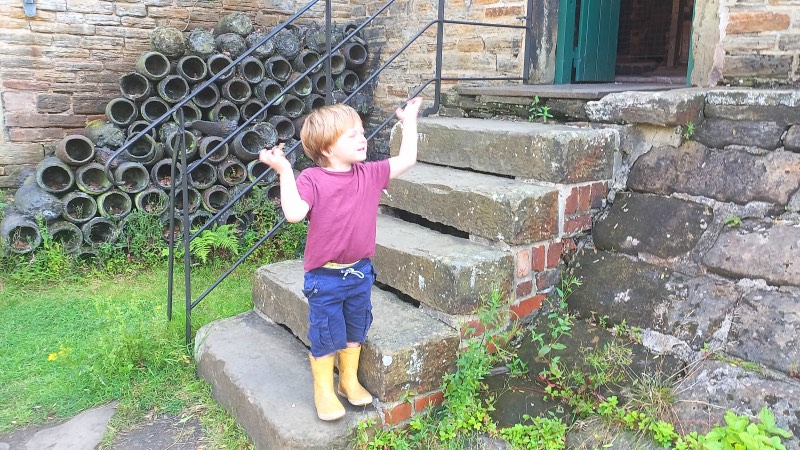
Accessibility at the Abbeydale Industrial Hamlet is reasonably good; however, there are some challenging areas. There is dedicated parking for disabled guests and families with young children in front of the cafe. The cafe and exhibition center are accessible for prams and wheelchairs; however, be aware that if these buildings are crowded, it could be a little bit challenging.
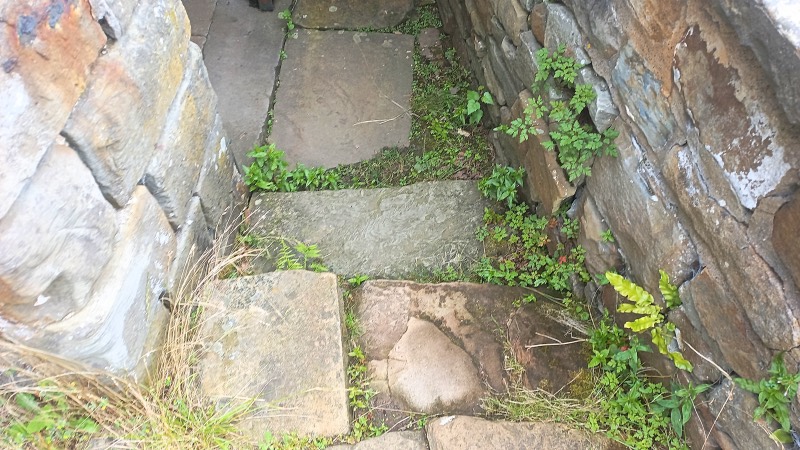
Some of the buildings on-site can also be accessed by wheelchair and pram as there are no steps; however, be aware that at some points, the ground is uneven around the Abbeydale Industrial Hamlet. Some of the rooms and workshops can only be accessed by using a staircase. If you’re visiting with young children and you have a baby carrier or sling, we do recommend using it to access more of the site.
If you are a wheelchair user, we recommend that you bring a helper if possible. There are staff on-site when the Hamlet is open, and they can also provide assistance.
A brief history of the Hamlet
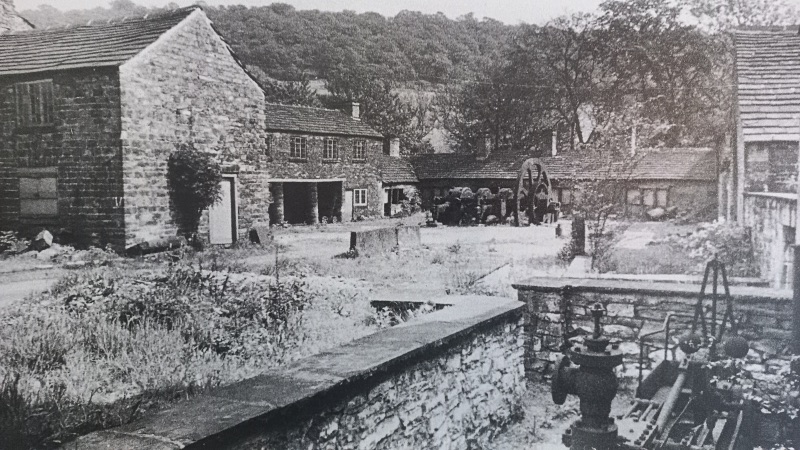
Abbeydale Industrial Hamlet serves as an industrial museum. For a 19th-century works, it is remarkably complete. Distinguishing itself from other sites, a considerable portion of the production process occurred on the same premises. This site is genuinely very impressive, with a history spanning over 800 years, with indications of metalworking activity even prior to the 12th century.
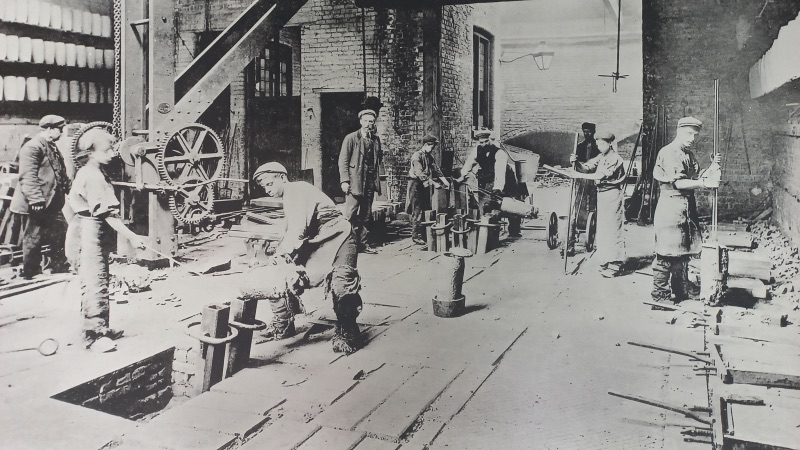
Its early development shares close ties with the neighboring Beauchief Abbey, which not only operated a blacksmith’s shop but also managed several mills along the River Sheaf. This museum is a part of the historical steel-working site situated along the River Sheaf, with its origins tracing back to at least the 13th century.
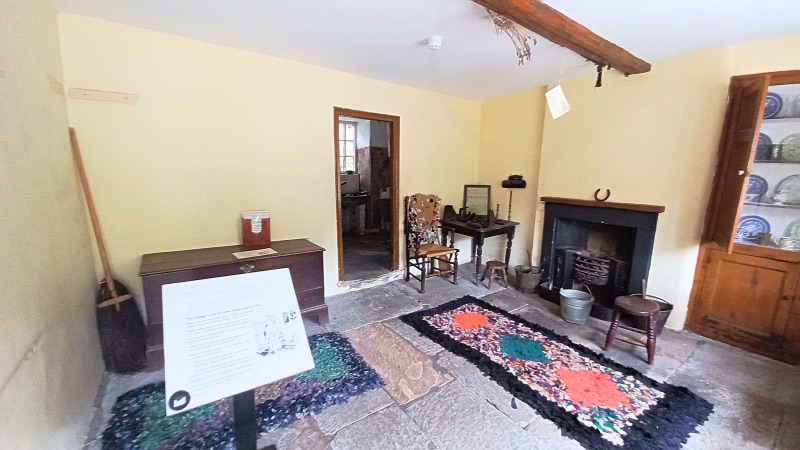
The Hamlet comprises several dwellings and workshops that formerly constituted the Abbeydale Works; a scythe-making facility. By the 1850’s the Hamlet was at its peak with thousands of implements exported around the world. The Hamlet was finally closed in 1933. In 1935 it was bought by the local philanthropist, J. G. Graves, who donated the site to the city. The works were briefly reopened during the Second World War to support the war effort. Following the complete restoration the works were finally opened as a museum in 1970.
Educational Activities at the Abbeydale Industrial Hamlet
The Abbeydale Industrial Hamlet is packed with amazing educational opportunities which can be used to engage children of any age:
1 Exhibition Centre
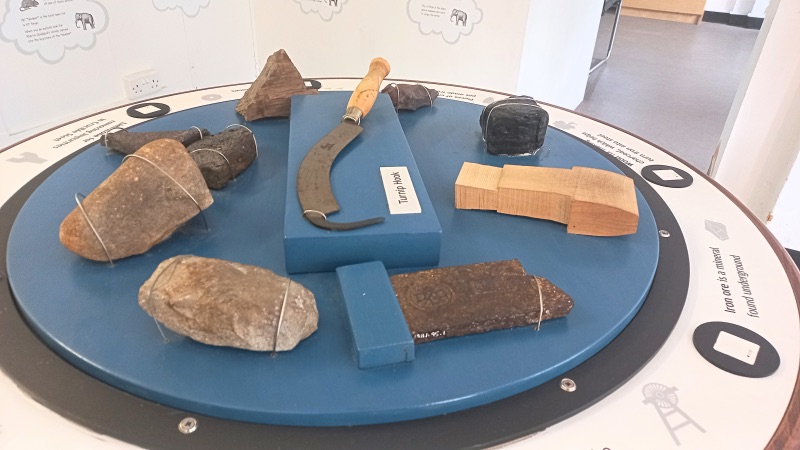
The Exhibition Centre is a dedicated building designed to educate visitors about the Abbeydale Industrial Hamlet. It is located just to the right of the main entrance. Inside, you can find displays and information about the Hamlet and the steelmaking process. This information is especially useful if you are visiting with teenagers or older kids. There is also a video that outlines the history of the Abbeydale Industrial Hamlet and discusses some of the things you can see on the site. For younger children, there is a table with coloring pencils and pictures to color in, and you can also make a donation in the Exhibition Centre.
2 Nature Hunt
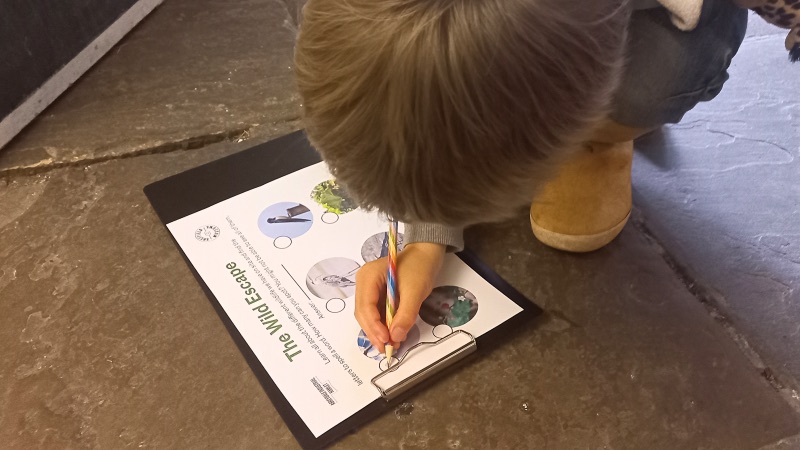
For younger children, there is a nature hunt activity. Children are given a clipboard and pencil and need to search for pictures of different creatures around the Abbeydale Industrial Hamlet. When they spot a creature, they will notice a letter written next to it and need to write this letter on their clipboards to reveal a mystery word. Although the nature hunt is free of charge, they do recommend a small donation.
3 The Works Gallery
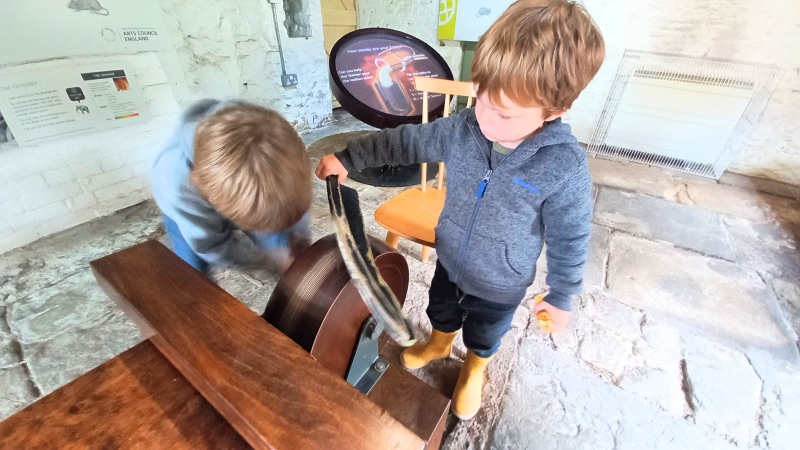
To the left of the Hamlet there is a room called the Works Gallery. The Works Gallery has a set of interactive exhibits and demos. You can get a feel for the the tools and learn more about the steel production process. You can visit this at the start or end of your visit to the Hamlet.
4 Blacksmith classes
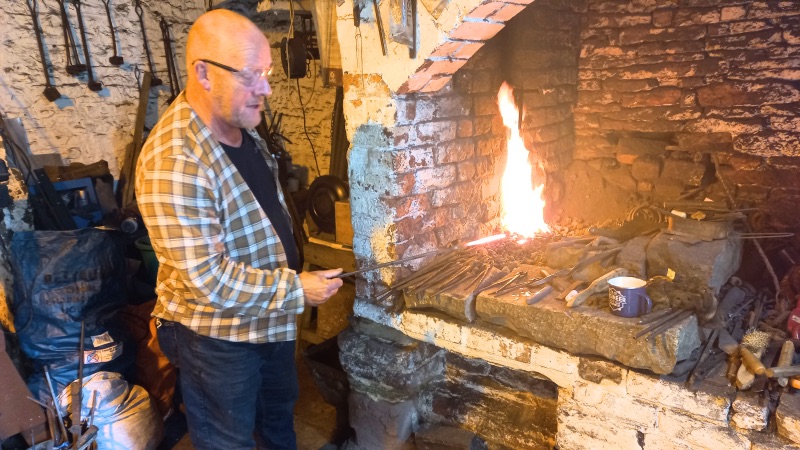
You can also take special private blacksmith classes at the Abbeydale Industrial Hamlet. These classes are held in the Corner Forge, a small workshop with a furnace and fascinating tools. If you’re interested in doing one of these classes, visit the Corner Forge (back left corner of the hamlet) on the weekend and ask to speak to Iain Jones. Classes are available most weekends and are given on a first-come, first-served basis. You can simply arrive on the day and take a class if there is availability.
The classes involve creative and fun projects, such as making a steel hook, and Iain loves to help people understand the science behind his trade. Two people are required for a class, and they cost around £100 for a morning. The minimum age for children is 10 years and older, plus a parent or adult. In our opinion, this is an amazing gift because you get an awesome educational experience, and you’re allowed to keep the product at the end.
Check the “What’s on” section of the Sheffield Museums website to find out about other seasonal classes and special events.
And of course one of the best educational opportunities is simply walking around for Hamlet and learning about the production process! Keep reading this article for an in-depth and step-by-step discussion of the manufacturing process, to help you make the most of your visit.
The Science of Steel Production: Overview
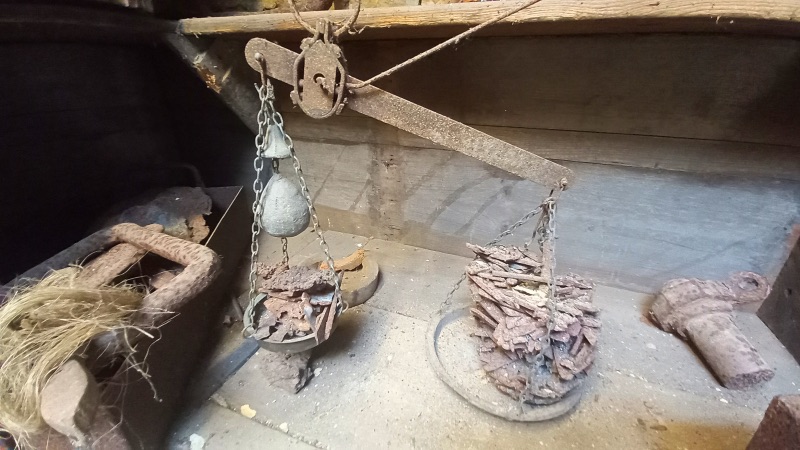
Iron is extracted from the raw material Iron(III) Oxide (a reddish brown rock) in a blast furnace. The Iron(III) Oxide needs to be mixed with coke (carbon) and heated. The hot liquid was blasted with air. The carbon removes the oxygen to form molten iron and carbon dioxide. The molten iron cools to make cast iron – a strong, hard, brittle, dark solid. To make steel some of the carbon needs to be removed and other elements added. This happened at the Abbeydale Industrial Hamlet in the crucible steel-making process.
Interactive map of the Abbeydale Industrial Hamlet
Click on the pins to navigate around the buildings and find out more information on each part of the Hamlet.
The best order to visit the buildings and workshops
We recommend visiting the buildings in the following order to follow the production process step-by-step. Will will share a more in depth guide for each building below:
- Exhibition Centre – Start with the Exhibition Centre at the main entrance to the Hamlet. This should give you some background information and context. You can also make a donation if you wish.
- Charge room – A mix of cast iron and other substances (such as sand, limestone, ash or glass) is prepared.
- Crucible furnace – The reaction mixture is placed in a 3 – 4 hour melt to reduce the percentage of carbon. The carbon slowly oxidizes and bubbles off as carbon dioxide.
- Dam & Water wheel – Water flows from the lake on to the water wheel which was used to power the tilt forge in the adjacent building
- The tilt forge – Rotating axles drive tilt hammers for shaping heated steel & an air pump is used to heat the furnace (making the steel malleable for shaping into Scythe blades)
- Steam Engine & Grinding Hull – Grinder used to shape sharp edges on blade
- The Hand Forge (Corner Forge) -Steel implements can be shaped by hand here to produce more artistic and ergonomic shapes
- The Blackening Shop -Blades were painted with blacking (to prevent rusting) and wrapped with straw rope.
Now you can visit some of the buildings that capture life in the Hamlet. These can be visited in any order:
- The Counting House & Workers Cottage – Learn about pay, wages & the workers lives
- The Managers House – See how a manager on the plant would have lived a few hundred years ago
- The Stables & Coach House – See the horse pulled carts
- The UnderCroft – See an exhibition on Sheffield steel
In depth step-by-step guide for the Abbeydale Industrial Hamlet
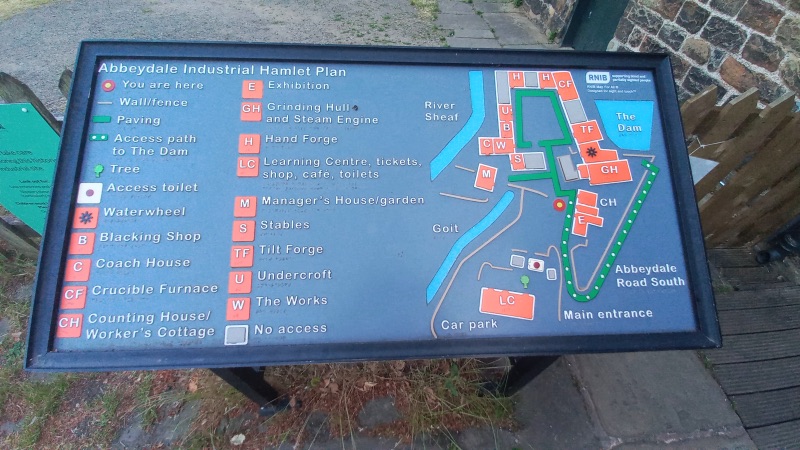
Here is some more detailed information for each of the main industrial buildings. This should help you understand the whole process in more depth. To help you navigate smoothly through the Hamlet we have listed these rooms in order of the production process:
1 Charge room
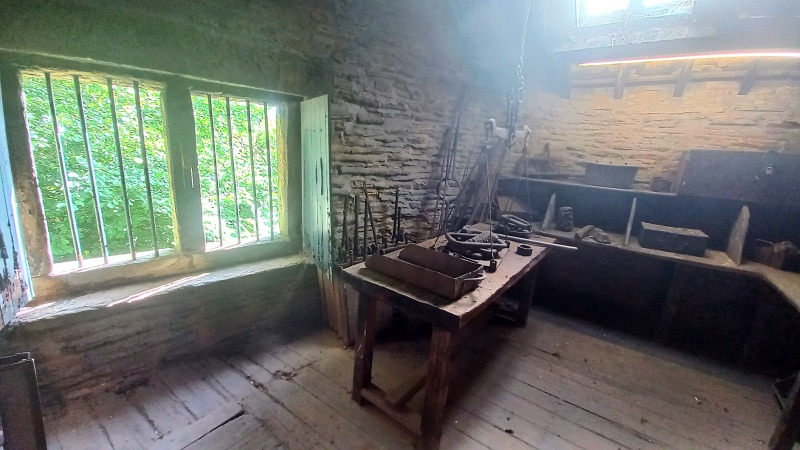
Start by heading to the back right corner of the Hamlet (to the building labeled CF on the map). This is the Crucible Furnace building. These buildings are not accessible for wheelchairs or prams. Head up stairs to the small room at the top. This is the Charge Room when the process starts. The Head Melter prepared a carefully measured dry mix of cast iron (the main raw material) and other fluxes such as sand, limestone, ash or glass. This was a very important job in the Hamlet and marks the start of the steel production process. The exact crucible mix determines the final properties and quality of the steel.
Learning opportunity: Relevant learning opportunities include a discussion of iron extraction (reduction of iron oxide), the effect of carbon content on the properties of iron and steel. You can also learn about the use of slow heat to remove excess carbon (crucible steel making) and the addition of other substances to fine-tune the properties of the resulting steel.
2 Crucible furnace
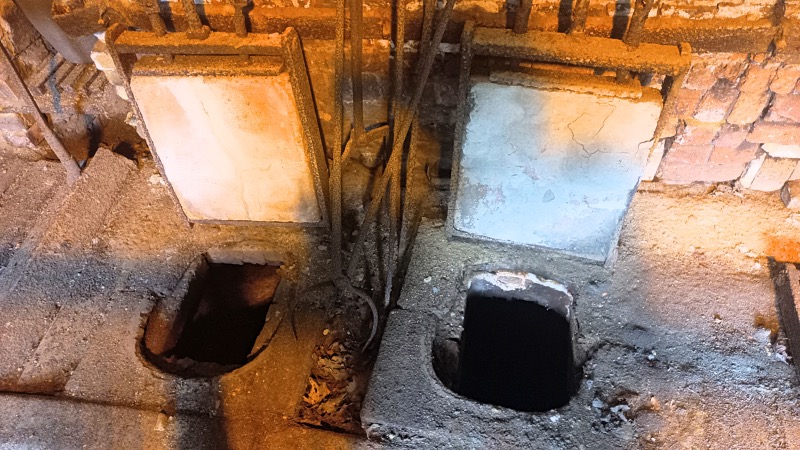
Stay in the same building and walk down stairs to see the crucible holes (you already passed these on the way up). This is where crucible containers were placed over a very hot coal furnace. The reaction mixture was placed over the furnace for 3 – 4 hours to decrease the amount of carbon in the mix. The molten steel was transferred to an Ingot mold.
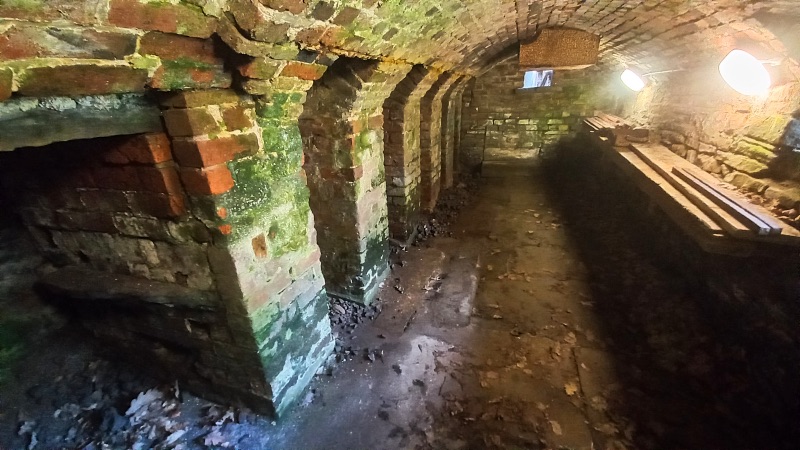
Walk down the stairs to see the furnace room where a very hot fire was maintained. We were stuck by the low ceilings in this furnace room. Shoveling coal here was a hot and grim job. The melters needed to use leather and sack cloth soaked in water to stop their legs or waist being burned.
Learning opportunity: Relevant learning opportunities include discussion of the maintenance of a hot furnace, the slow oxidation of carbon in the molten mixture (to make steel) and the hazardous conditions that workers endured in this part of the plant.
3 Dam & Water Wheel

Now follow the path near the main entrance to the dam. The dam is very picturesque and is used to power the waterwheel below. Return to the main Hamlet square and see the waterwheel to the right of the Hamlet. Sheffield is a hilly city – this provides the rivers that were used to power steel production plants like the Abbeydale Industrial Hamlet. Water flows from the lake onto the water wheel which was used to power the tilt hammers in the adjacent building.
Learning opportunity: Relevant learning opportunities include a discussion of energy changes at a water wheel: Gravitational potential energy (water at a height) is converted to kinetic energy (the energy of motion). This energy is used to power the tilt forge next door.
4 The tilt forge
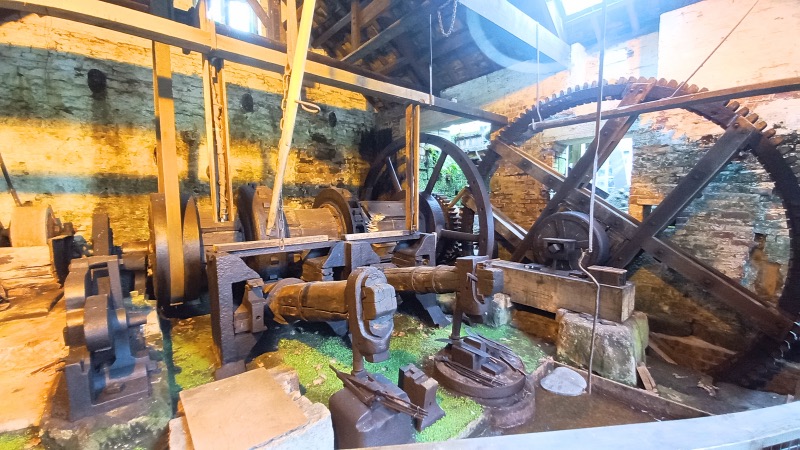
Now go to the building next to the waterwheel. This is called the Tilt Forge (labeled TF on the map). The tilt forge is arguably one of the most impressive buildings in the Hamlet. It has full intact tilt hammers and all the original structures and equipment are in great condition! Rotating axles drive tilt hammers for shaping heated steel & an air pump is used to heat the furnace (making the steel malleable for shaping into Scythe blades). This forge was used to make the rough shape of the blade. Special shapes could also be developed in the Hand Forge by skillful blacksmiths.
Learning opportunity: Notice how there is a large hot furnace, stoked by an air pump. Steel is heated until it is glowing red hot. The heated steel is more malleable and can be placed under tilt hammers to shape the profile of a blade. Observe how energy from the wheel is transferred and directed into useful work in the tilt forge.
5 Steam Engine & Grinding Hull
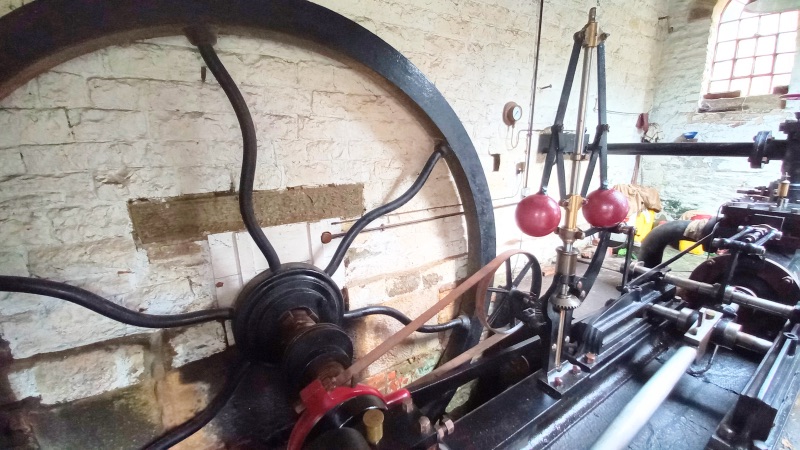
Now visit the Steam Engine and Grinding Hull (labeled GH on the map). The steam engine was used to drive the grinding wheels. The steam engine is a large and impressive piece of engineering. The mill stone grinding wheels were used to shape sharp edges on the blades. This represents the final step in the process of blade production. The blades were sold without handles.
Learning opportunity: This is a good opportunity to discuss and learn about the environmental risks of working in a steel grinding mill. Exposure to dust and airborne particulates lead to a disease called Silicosis. This is also an opportunity to discuss the importance of steam engines for the industrial revolution.
6 The Hand Forge (Corner Forge)
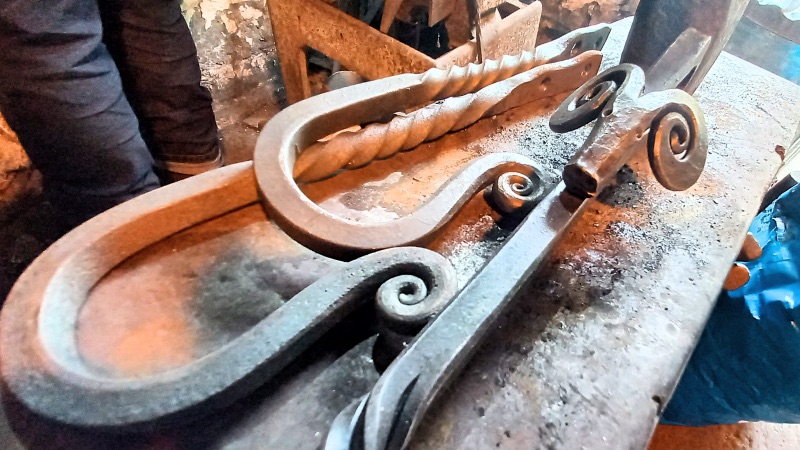
The Hand forge (is labeled H on the map). This forge has a small furnace, anvil, hammers and other tools for making more intricate objects. Steel implements can be shaped by hand here to produce more artistic designs, functional tools and ergonomic shapes. If you’re lucky you may be able to see a blacksmith at work here (weekends more likely)
Learning opportunity: You can actually take blacksmith classes at the Hand Forge. You can often see a blacksmith working in these forges on the weekends. Younger kids can observe the effect of air blasted on the fire and learn about the fire triangle. Older kids can learn about the relationship between temperature and glowing color.
7 The Blackening Shop
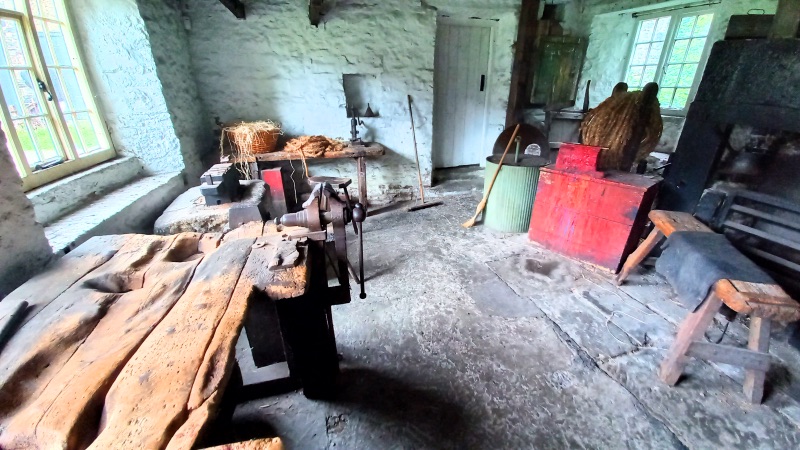
Blades were painted with a protective coating called blacking. This protects the blade from water and oxygen and prevents rusting. The blades were wrapped with straw rope for safety before being exported for sale. In the blackening shop you can see an array of tools and original wooden work tops. Notice the profile of the wooden table which has been deformed by years of use for processing the blades.
Learning opportunity: This is a good opportunity to learn about the use of blackening oil to protect the blades from oxygen and moisture and prevent rusting. Older kids could also learn about the rusting reaction (the oxidation or iron to iron oxide in the presence of water).
Learn about life on the Hamlet
Once you have explored the workshops and production buildings you can also visit several buildings that will help you learn more about life and work on the Hamlet. This is a fascinating way to engage in the amazing history of the Hamlet:
1 The counting House
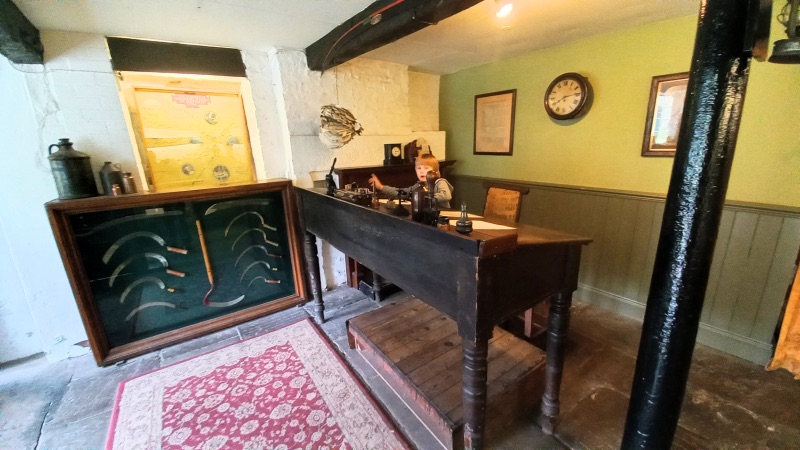
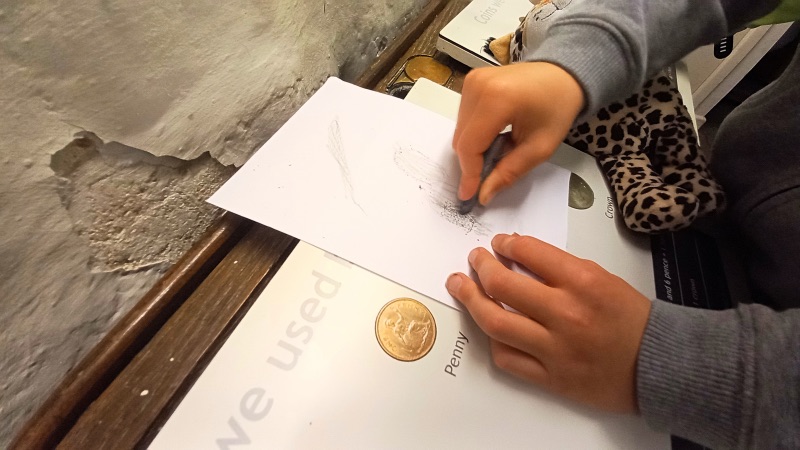
Learn about the financial management of the Hamlet and see historical coins and record books. Kids can do wax rubbings of these coins. You can learn about how the workers were paid. The display in the counting house is fascinating. They list the average pay for different works in the Hamlet and they also show you what these amounts could buy at the time.
2 The workers Cottage
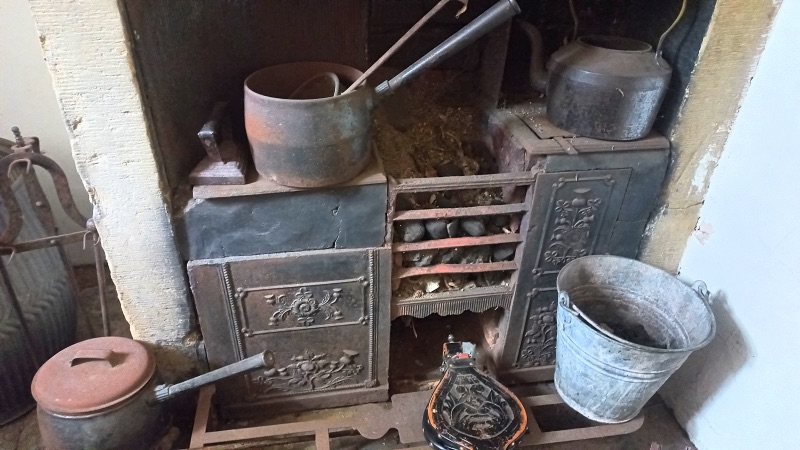
Just as you enter the hamlet you can see the workers cottage to your right (this is next to the exhibition centre). The workers cottage is a small two story house with some fascinating artefacts and furniture. These houses were converted into a an exhibition house in the 1970’s when the Hamlet opened as a museum.
3 The Managers House
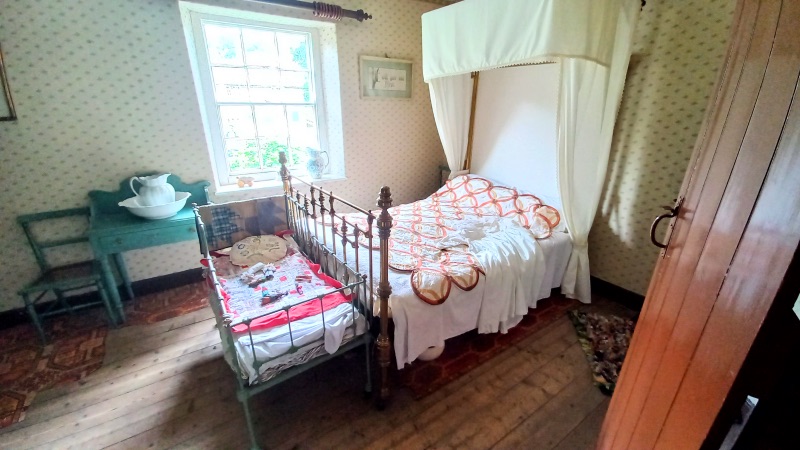
The Managers House is fascinating. This is another opportunity to get an insight into a Hamlet Managers home in the Industrial Revolution. Some of the furniture has been specifically set up to give you an impression of a historical home, and there are also some original artefacts too. You can also see the stables just next to the managers house.
Examples of links to the school curriculum
LOVE LEARNING ON THE GO? Find out about Everything you need to know about Worldschooling
Here are some examples of Educational opportunities and curriculum links at the Abbeydale Industrial Hamlet: In this table we have included relevant curriculum links for each of the UK key stages:
| Location in the Hamlet | Curriculum link | |
| Pre-school(3 – 6 years old) | Visit the counting house and the Managers House | Do wax rubbings of old coins. Practice counting in different units. Learn about how homes were different to modern homes. |
| Key Stage 2 (7 – 11 years old) | Visit the Corner Forge and the Blackening Shop | Learn about the fire triangle (heat, fuel and oxygen). Learn about the properties of steel (hard, strong, malleable) and relate this to the uses of steel. |
| Key Stage 3(11 – 14 years old) | Visit the water wheel and the Tilt Forge | Learn about the change in energy forms (gravitational potential energy of water in the lake to kinetic energy of the wheel). Discuss how machines can be used to transfer energy and do useful work. |
| GCSE (15 – 16 years old) | Visit the Charge room and the Crucible Furnace | Learn about how cast iron is made i.e. the reduction of Iron Oxide using Coke (carbon) to make iron. Learn about the conditions and the balanced equations for the oxidation of carbon and the reduction of iron oxide. This produced the raw materials for steel production. |
| A-level(17 – 18 years old) | Visit the Charge room, the Crucible Furnace and the Corner Forge | Learn how the properties of steel can be fine tuned by changing the percentage of carbon & other elements. Learn about the risks and health implications for workers in the plant. |
What is the cafe like at the Abbeydale Industrial Hamlet?
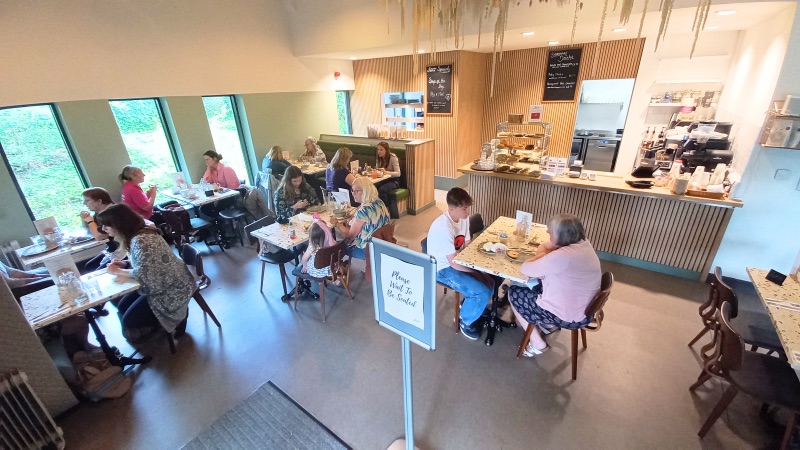
The onsite cafe is called Joni. This is a stylish and decadent cafe serving an excellent range of food and drinks. The cafe can get very busy at lunch – so arrive early if you’re in a rush. When you see the food it is no surprise that this is a popular place.
You can reserve tables on the day – just pop in to the cafe in the morning and ask for a table.

What are prices like at Joni Cafe?
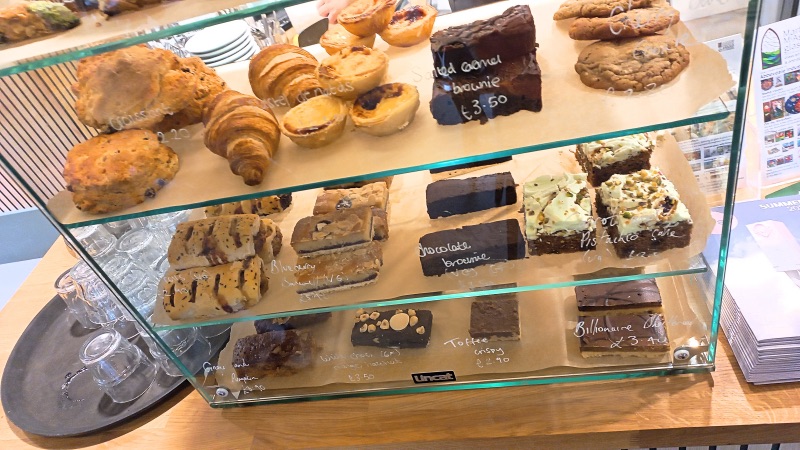
Prices are on the high side – but the quality is also very high too. The lowest price items on the menu include sourdough Toast with butter or jam (£3.90), and drinks which generally range from £3 – £4. Some of the most tempting items on the menu include Turkish Style eggs; poached eggs on a sourdough bloomer with spice yogurt and chorizo (£11.95) and the Joni Eggs Royal (£11.95). We are also very impressed with the tasty Rainbow Salad (£9.50).

There are plenty of other gourmet dishes on the menu. The Joni Cafe also has a very tempting selection of cakes and freshly baked treats.
What’s on the menu at Joni Cafe?
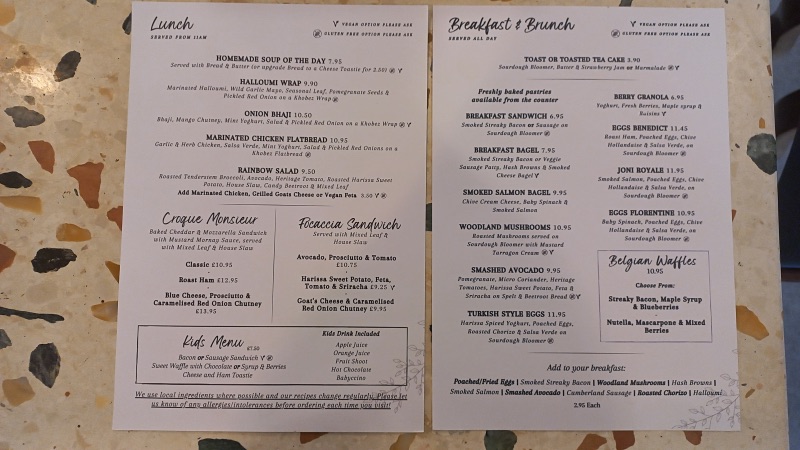
The Joni cafe has a creative and tempting menu. It includes breakfast and lunch items – both menu’s are served throughout the day. They also have a lovely drinks menu too.
What seating is available at the Joni Cafe?
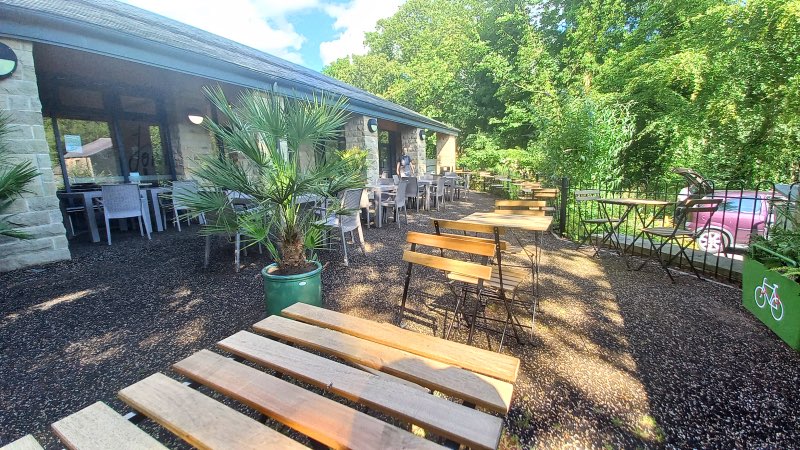
The Joni cafe has an indoor seating area. This can get busy – especially around lunch and on weekends. There is also an outdoor seating area with plenty of table. This is a great way to enjoy your food with beautiful views of the woodland valley.
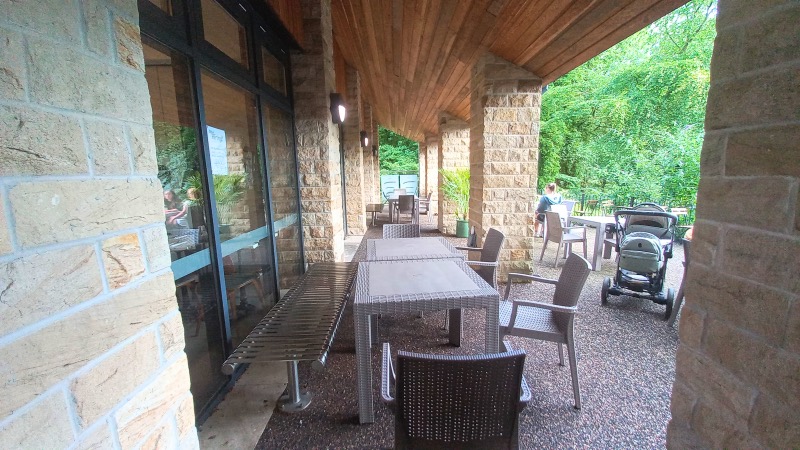
Some of the tables in the outdoor seating area are also covered, so you can sit outside, even in bad weather.
Is Joni Cafe Family Friendly?
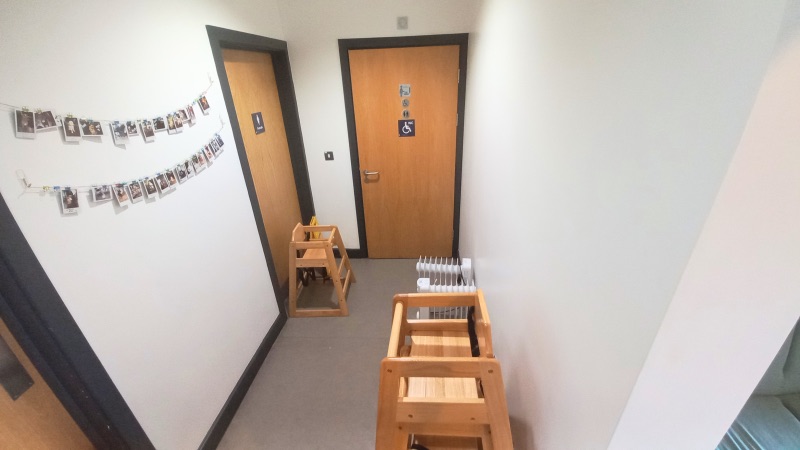
The Joni Cafe is great for families. There is dedicated family parking (for parents with young children) directly outside the cafe. There is also an overflow carpark behind the cafe.
They also have a kids menu for £7.50 which includes a main dish and a choice of a kids drink. The cafe has high chairs, toilets and both indoor and outdoor seating.
What are the Joni Cafe opening times?
The cafe is open every day of the week 9am – 5pm. Be aware the kitchens may close a little before 5pm.
Other things to do near the Abbeydale Industrial Hamlet

Sheffield is packed with epic activities. Here are a few other things you can do in the area:
- Don’t miss the Abbeydale Miniature Railway near the Hamlet
- After exploring the Hamlet why not take a walk in Ecclesall woods and visit the discovery centre. The woods are just across the road from the Hamlet.
- If you’re interested in farms consider a visit the the nearby Whirlow Farm or the Heeley city farm
- This part of Sheffield is also next to the Peak District – an amazing place for lots of epic walks.
