

Table of Contents
What are the biggest challenges of traveling in the Philippines and how do you prepare for them? In this article, we are going to reveal some of the biggest challenges of traveling in the Philippines.
Although we are focusing on some of the challenges of traveling in the Philippines, we absolutely love this beautiful country. The Philippines really does have so much to offer, so we are not trying to be negative or put you off. We just want to help you plan and prepare for some of the challenges so that you have a more enjoyable and smoother trip.
We’ve visited the Philippines many times over the years, including several trips with kids. We are writing this article based on our own first-hand experience of some of the challenges that we have faced traveling around the Philippines. It is worth pointing out that the challenges are not unique to families; the challenges that we encounter would be challenges to anyone. So, this article is relevant to anyone who is planning to visit the Philippines, whether you are a solo backpacker, a couple, or a family.
One more thing: Although we are focusing on the challenges, we like to be positive and constructive. So, we will suggest some potential solutions and ways that you can prepare for your trip so that you have a smoother and more enjoyable experience.
FULL AND DETAILED GUIDE – How to Travel the Philippines on a Budget
Some context

This article focusses on some of the biggest challenges of traveling in the Philippines. Travelling any country has its inherent challenges. And we always try to keep it real and share these with you. However, it is worth recognising that the Philippines is more challenging to travel compared to other southeast Asian countries (including Thailand, Singapore, Malaysia & Vietnam). If you are trying to weigh up whether to visit the Philippines or a different country we hope that this article helps you get a realistic and objective insight into the country from the point of view of a traveller.
Why visit the Philippines?

Before we share the challenges of visiting the Philippines, we wanted to consider some of the positive reasons to visit the Philippines. It is important to weigh everything up when you are considering the challenges. Remember, there are great rewards when you are visiting an epic, beautiful, and stunning country like the Philippines. There are lots of amazing reasons to visit the Philippines. One of the biggest attractions of the Philippines is its beautiful oceans.
The Philippines has miles and miles of stunning coastline with beautiful golden sand and white beaches. It has crystal-clear waters, stunning vibrant coral reef, incredible marine life, amazing diving, snorkeling, and free diving. So, if you love the oceans or you love a good beach, then we think you will really love the Philippines. In fact, the Philippines offers some of the best diving, free diving, and snorkeling we have ever encountered in all our travels around Southeast Asia and around the world. The Philippines also has some stunning inland attractions too. For example, the Philippines is home to some of the most impressive and beautiful waterfalls that we have ever seen. And nature, the Philippines has plenty to offer. So if you’re a fan of nature and wildlife, you will love the Philippines.
1 Regular Power Cuts
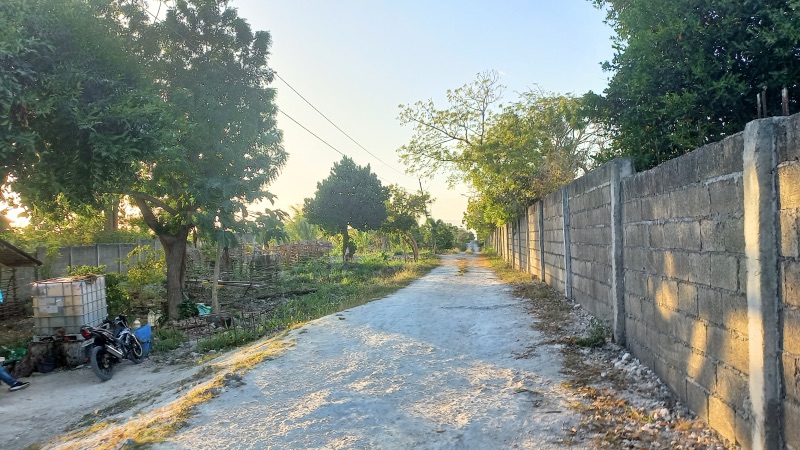
One of the biggest challenges you will encounter as a traveler in the Philippines is power cuts. This is a relatively widespread and frequent problem, especially if you’re traveling to islands, small towns, or more rural locations. Power cuts are relatively frequent, and they can be pretty short-lived, generally lasting only an hour or two. In some situations, there will be scheduled power outages, which can last a day or more. As a traveler or tourist in the Philippines, you may not be aware of scheduled power outages, so you may not be able to prepare.
Generally speaking, we recommend keeping phones, laptops, and other devices fully charged as much as possible so that you can still use them if there is a power outage. Furthermore, we recommend traveling with a portable power pack if you are able so that you can charge your devices in the event of a power cut. We also recommend traveling with a head torch. This can be particularly useful if the power cuts out at night. Many hotels and guesthouses do not have backup generators. This means that your fan and air conditioning will stop during a power cut. This can be very challenging, especially if it happens at night, and you wake up hot and sweaty. Consider traveling with a small battery-powered fan, especially if you are traveling with kids. We experienced regular power cuts both in Palawan and also in Cebu.
2 Unreliable ATM Machines

Another very common challenge in the Philippines is unreliable ATM machines. This can be a particular problem because many places do not accept international bank cards for transactions, so you will need to pay in cash. Many travelers get stuck without cash. In some areas, ATM machines are few and far between, and they can often be out of order or unstocked. During our time in the Philippines, we have also seen many long queues for ATM machines due to their infrequency and unreliability. We recommend that you always travel with some backup cash. Try to take money out two or three days before you actually run out of money. This will allow you a safety window in case you are unable to find a working cash machine.
3 Expensive Accommodation
A room like this is likely to cost at least $30 per night – this is a lot relative to Southeast Asian prices. And the room is pretty basic at this price…
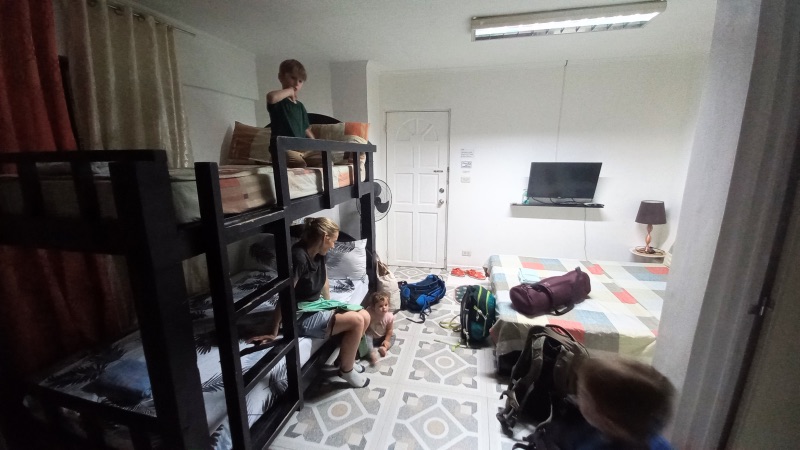
If, compared to other countries in Southeast Asia, the Philippines is quite expensive for accommodation. Although accommodation in the Philippines is expensive, you actually don’t get a lot for your money. The quality is relatively low in comparison to the price. It can be very challenging to find a good place to stay that meets all of your needs, even if you are paying relatively high prices for accommodation. It may be pretty basic, simple, and not particularly hygienic.
We recommend using a good platform like Agoda or Booking.com to find your accommodation. Make sure you take time to read reviews and look for places that have a reasonable rating. If you’re looking for accommodation in the Philippines, we recommend trying to find places with a Booking.com review rating of at least 6 or 7. Although this may not seem like a very high number, it is actually relatively high for the Philippines.
4 Unreliable Internet
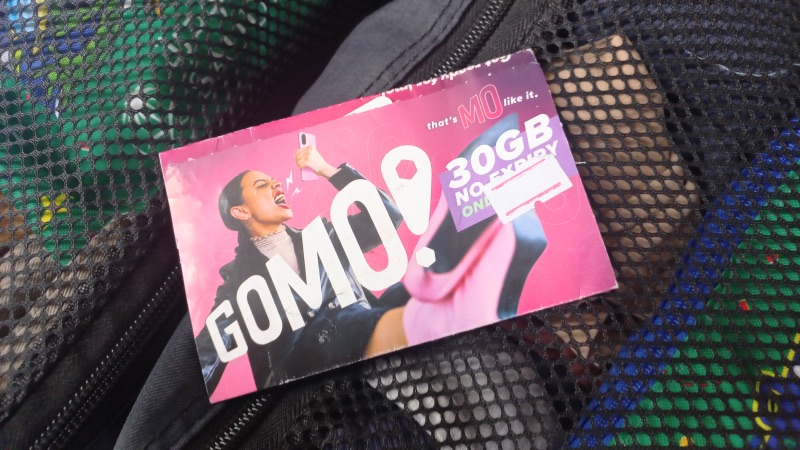
Another challenge of traveling in the Philippines is unreliable internet. You can find prepaid SIM cards with a reasonable amount of mobile data; however, the signal coverage and internet speed are pretty poor. This is especially true if you’re planning to travel outside of the main cities. As soon as you get into a rural area, you will find the network coverage is relatively limited and weak, and internet speeds are slow. Expect to pay around 700 pesos for a data package (this should get around 50GB data which is plenty for most travelers). 700 pesos is roughly £10 or $12. So SIM cards are relatively cheap in the Philippines.
We also found that the internet in hotels and guesthouses is slow and unreliable, so don’t rely on your accommodation to have good wifi. If you are planning to work on the road or you are a digital nomad, you may find the internet quite challenging. We recommend preparing your work so that you do not rely on fast internet during your trip. Make sure that you have documents available offline and prepare to do offline tasks whilst you’re in the Philippines. You may also find it challenging to make calls using services like Skype, Zoom, or Google Meet. You may want to reschedule any important calls. If you have a phone that is compatible with e-sims, this is another way to get a better service.
TOP TIP: Smart is one of the biggest mobile providers in the Philippines and some people claim it is the fastest. In our experience Gomo pre-paid sim cards are faster and have better coverage than Smart. Gomo costs 600Pesos for a 30 day 30GB sim card and you can add more data. This is plenty of data for most travellers. You do need to register your account on their app and this is a pretty awkward process. Once you’re registered your sim should be active immediately and you’re set to go with mobile data.
5 Challenges with the Online Immigration Card
This may be a one off but it may well be one of the biggest challenges of traveling in the Philippines.
When you arrive in the Philippines, you will need to fill an online immigration form on the Official Phillipines e-travel Website. You have to give a lot of details about where you’re planning to stay, how long you will be staying, your arrival details (e.g. flight number), and a medical declaration. It is a relatively long form compared to other countries. Adults and kids need a complete form. The biggest challenge, however, is the fact that you need to complete this form online. If you do not get organized and do this before your trip, you will need to rely on the weak wifi in the immigration hall. Also it is very hard to fill out this form on your phone.
This can be particularly frustrating, especially if a large flight has arrived. The wifi capacity is not sufficient for the number of people that need to register, so you will be stuck trying to complete an online form before you can even join the queue to get your passport stamp. We found this very frustrating and difficult; therefore, we highly recommend that you complete this form online before your flight. You can fill the form out up to 72 hours before your arrival in the Philippines. There is no option to do a paper immigration card – so you really do need to do it online. So, make sure you take a little time to do this before you travel!
6 Finding Clean Healthy Food
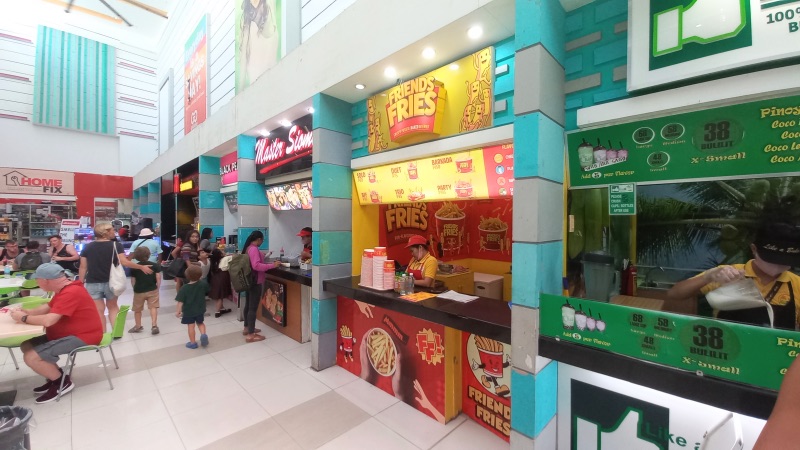
The food in the Philippines is generally pretty cheap, affordable, and tasty; however, you will often find that the food is either unhealthy or unhygienic. Many travelers in the Philippines get stomach upset and end up with diarrhea. In some cases, travelers experience more complicated complications such as gastroenteritis, vomiting, and on going problems with food poisoning. If you are new to Southeast Asia or the Philippines, we recommend being very steady and cautious with street food. Avoid food that has been left out for a while (most street food in the Philippines!).
There are still some good options for food in the Philippines; watch out for bakeries, as this is a relatively safe form of food. There are plenty of bakeries around due to the Spanish Colonial influence in the Philippines. You can also find plenty of convenience stores around the Philippines; 7-Eleven stores are relatively common, even in rural areas. 7-Eleven stores tend to stock a range of snacks and safer food options. So if you’re stuck for food, keep your eye out for a 7-Eleven.
A case of food poisoning can really put a damper on your trip and prevent you from doing some of the epic activities you have dreamed of.
Another challenge of food can be finding fresh, healthy food. If only on a short trip, this may not be a problem. However, if you’re a long-term traveler, you may struggle with the lack of fresh, healthy food options available in the Philippines. You can find plenty of pre-packaged bread, fried chicken, burgers, and fast food. However, there is not a culture of fresh, healthy, tasty food (like Thailand). The healthiest food options in the Philippines include fresh coconuts, fresh fruit, roast chicken, and barbecued fish.
7 The Language Barrier

You may not think that the language barrier could be a big problem in the Philippines. After all, many people do speak at least some English. However, we did find the language barrier could be challenging at times, especially if you’re trying to make more complicated or nuanced arrangements. Although most locals in the Philippines do speak a reasonable amount of English, we found that locals would often act like they understand more than they actually do. For example, we would often find locals nodding their head in agreement even though they were unsure of exactly what we were asking for. We found it very helpful to ask people to repeat back key information (especially when we were trying to make an important arrangement). It can also be useful to write things down or use Google Translate to help you with the language barrier in the Philippines.
8 The Climate
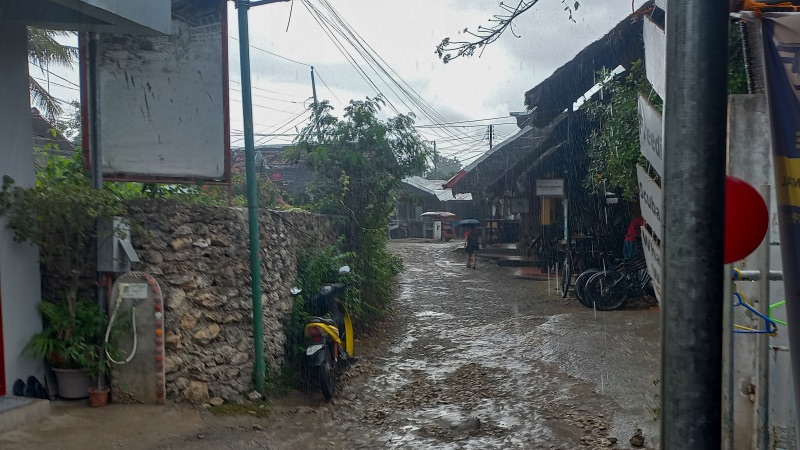
And finally, the climate can be one of the challenges of traveling in the Philippines. You may not think that a hot tropical climate is a challenge(!) However, it can be very humid, and during the hotter hours of the day, it can get intensely hot (so much so that you can end up getting heatstroke or heat exhaustion!) It is important to consider sun protection and remain in the shade, especially during the hottest hours of the day. It is also important to be aware of the seasons.
Some of the islands, especially around the east edge of the Philippines (the Pacific Islands), can have quite intense monsoons. Monsoon season (May – October) can cause disruption to activities such as canyoning, diving, snorkeling, swimming. And of course, you’re not going to be sunbathing on the beach during a monsoon!! So consider the season that you travel and make sure that you are not planning any weather-dependent activities, especially if you’re visiting during the monsoon season.
