
Table of Contents
If you’re planning to visit Shirakawa-Go Praying Hands Village in 2025, you have come to the right place. In this article, we’re going to tell you everything you need to know to plan an independent adventure to this beautiful, iconic, unique praying hands village.
Shirakawa-Go is one of the biggest and most beautiful praying hands villages, and it is only located an hour from Takayama. However, there really are some important things that you need to know before you go. We really do recommend that you plan your trip carefully to ensure that you get the most from your experience. A little research now can save big mistakes later.
In this article, we’ll share all of the practical information you need to plan an independent trip to this beautiful village, including a step-by-step transport guide, prices, specific recommendations in the village, and some super helpful top tips.
GET YOUR DUCKS IN A ROW – why not book an Amazing tour of Takayama and the Praying Hands Village on KLOOK – this tour is great value for money and departs from Nagoya 🙂
ALSO – Don’t miss these Epic things to do in Takayama
Why should you visit Shirakawa-Go Praying Hands Village?

If you’re planning to visit Takayama, we highly recommend that you include a visit to the Shirakawa-Go Praying Hands Village in your itinerary. Exploring this beautiful village was genuinely one of the highlights of our trip to Takayama. We visited with our three young kids, and they absolutely loved it too.
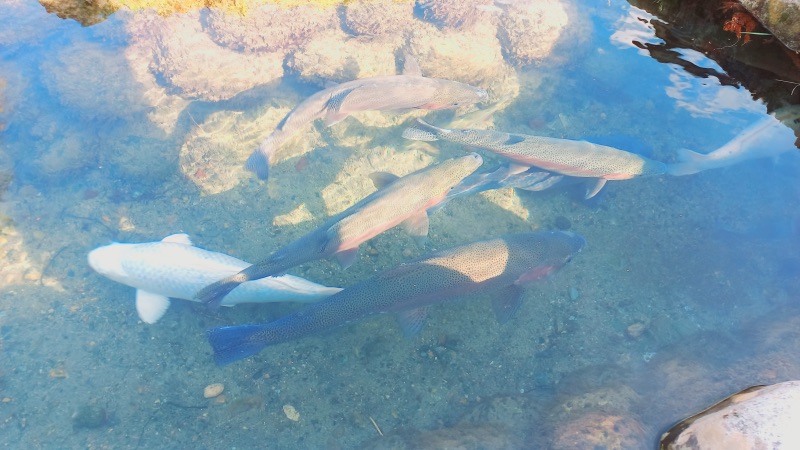
The village itself is stunningly beautiful. It is surrounded by beautiful, tall mountain peaks, which are covered in snow until late spring. The village has lots of small pathways, gardens, trees, ponds, and small streams with fish (our kids particularly loved this).
There are also plenty of praying hands houses to look at. Although this village is a popular spot, it is big enough to absorb the crowds. Even during the busier parts of the day, you can still find quiet spots and get stunning, iconic, and relatively empty photographs of the beautiful houses.

If you love photography, you will absolutely adore this beautiful village. Shirakawa-Go is also a great place to learn about and connect with the rich and unique culture and history of the region. Several houses are opened up as museums so that you can explore and learn about agriculture, trade, and life in the village. Shirakawa-Go Praying Hands Village is also a great place to try some local food, including a good range of food from small street side vendors selling barbecue, a few food boutique cafes, and local restaurants serving an array of local dishes.
LEARN MORE – What is the best praying hands village in Japan? – Everything you need to know
Can you stay in Shirakawa-Go Village?

Yes the great news is that you can actually stay in Shirakawa-Go Village. Immerse yourself in the beautiful scenery and see the village at its BEST before and after the tourist groups arrive! We highly recommend the trendy & yet traditional Onyado Yuinosho – You can book this hotel on Agoda and on Booking.com.
Why is Shirakawa-Go called the Praying Hands Village?

Shirakawa-Go is often referred to as the praying hands village due to the characteristic and unique style of the houses. The large thatch slanted roofs look like two praying hands coming together (in Japan this is referred to as Gassho-zukuri construction). This style of roof construction is unique to the region. In fact, Shirakawa-Go is not the only praying hand village in the area (it is, however, the biggest and most impressive village). The slanted roof design offers structural strength to the house, enabling it to withstand heavy snow drifts during the extreme winters in the mountains. The use of thatch roofing both insulates the house and protects it from the severe elements in the region. The communities in the region traditionally survived on farming and silk production. You can visit several silkworm museums in the area.
What can you see and do at the praying hands village?
GOING SOLO? Don’t miss this FREE Self-Guided Walking Tour of the Village
There are lots of things to see and do at the praying hands village. If possible, we recommend taking a full day for your trip. Here are a few of our top recommendations if you are visiting Shirakawa-Go:
1 Visit a house museum
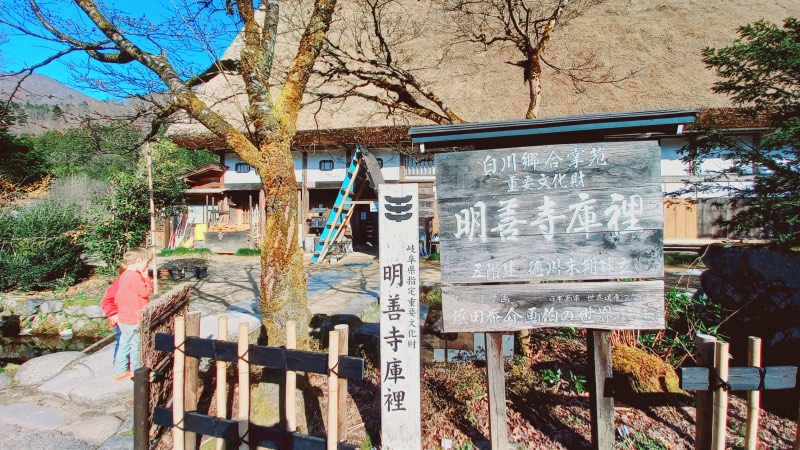
If you are visiting the praying hands village, you can also take a tour of one of the praying hands houses. Several houses have now opened up as museums so that you can walk around, explore, and appreciate the unique architecture from the inside of the house. The museum houses have artwork, exhibits, and artifacts, in some cases dating back to the original period when the praying hands houses were built. Most museums cost 400 yen for entry (and 200 yen for children). At present, there are 6 house museums in the village that you can look around: Wada House, Nagase House, Myozenji House, Ozuzaemon House, Tajima House, and Binen-Yumeromu House. We particularly enjoyed the Myozenji Museum. We will share more about this soon, so keep reading.
Top tip: It is important to recognize that this is a residential village. Many of the houses are not open to visitors and they are genuinely people’s homes, so it’s important to respect their space and privacy.
2 See the Ogimachi suspension bridge

To the west of Shirakawa-Go Village, you can see the Sho River and an impressive suspension bridge. This is a great spot for a picnic, a short stroll, and some pretty photographs. If you cross the suspension bridge, you can also walk down to the riverbank. There is a nice grassy section to relax and enjoy the view.
3 Visit the viewpoint (observatory)

Shirakawa-Go Praying Hands Village is beautiful from every angle. If you want to enjoy a particularly impressive panorama of the village, then either walk or take a free shuttle bus up to the viewpoint (the local Japanese translation into English is the observatory – which can be a little confusing because the viewpoint does not have an astronomical observatory). It takes around 20 minutes to walk up the hill to the viewpoint. Alternatively, if you want to take the free shuttle bus, you will need to wait at the bus stop which is situated just south of the restaurant Shirakawa-Go Irori. The shuttle bus to the viewpoint departs every 20 minutes, with the first bus at 9:00 am and the final bus departing at 3:40 pm (buses do not run over lunchtime; there are no buses between 11:40 am and 1:20 pm).
4 Try some Hida Beef

If you’re traveling in this region, we highly recommend sampling some of the delicious Hida beef. This is a famous delicacy in Japan and for good reason. Hida beef is a type of wagyu beef known for its particularly rich flavor and fatty, marbled composition. There are lots of small shops selling barbecue beef skewers for around 600 yen.
5 Visit the Onsen
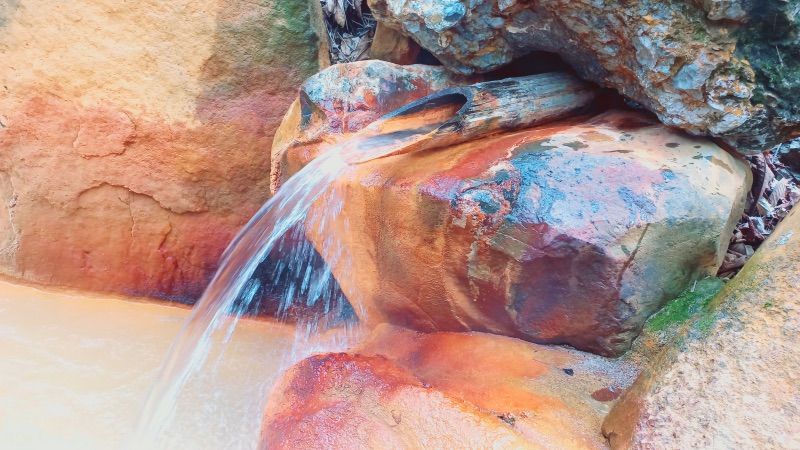
If you’re looking for a unique and relaxing experience in the village, why not visit the Shirakawa-Go no Yu Onsen? It is situated opposite the bus terminal. It costs 700 yen to use the hot spring, and non-hotel guests are welcome. You can also rent a towel for 450 yen. There is an outdoor hot spring pool. You are not allowed to enter with tattoos.
6 Visit the Heritage Museum
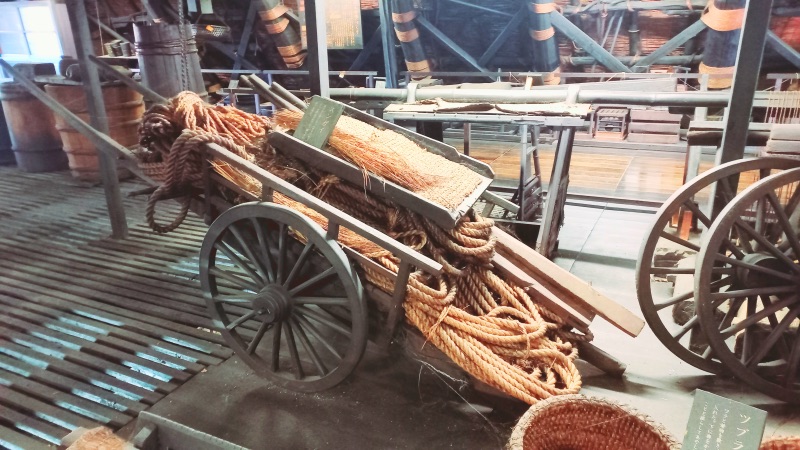
If you are hoping to go more in-depth learning about the culture, history, and heritage of this village, then we highly recommend a visit to the Heritage Museum. This is situated on the south side of the village, across the suspension bridge and next to the Seseragi carpark. The Heritage Museum costs 600 yen for entry.
7 Try a Hida milk ice cream
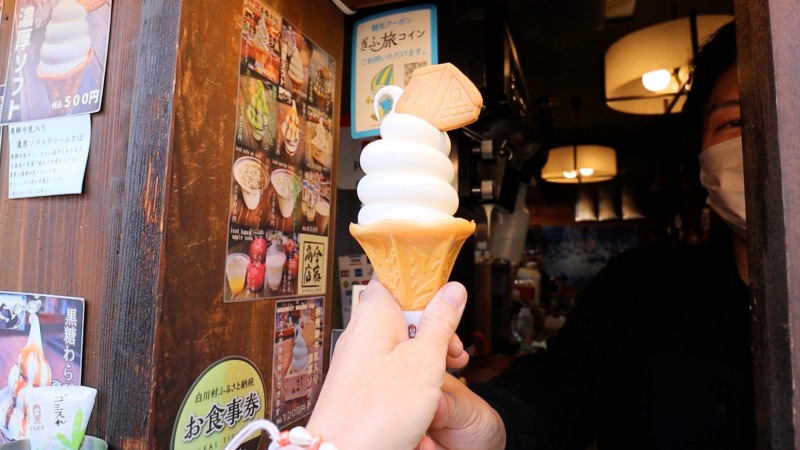
If you’re exploring the village on a sunny day, we highly recommend grabbing a Hida milk ice cream. There are lots of small shops serving ice cream. You can get a range of different toppings and styles of ice cream. We found the ice cream to be particularly smooth and creamy, and not over-sweetened. Ice creams start at around 500 yen for a generous cone.
How long does it take to explore the praying hands village?
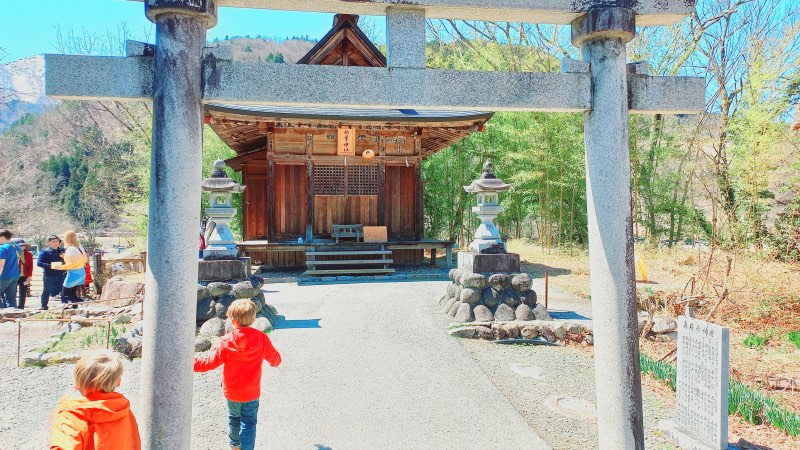
The journey to the praying hands village from Takayama takes around one hour each way. In theory, you could see the village in about 15 or 20 minutes if you just want to snap a photo or two. However, if you are hoping to explore the village in-depth, we recommend allowing a full day for your visit. There really are a lot of things to see and do in the area, so if you are hoping to visit the river, a couple of museums, a viewpoint, try some tasty food, and maybe even take a dip in an onsen, we recommend allowing a full day.
Photo tips for Shirakawa-Go Village

Firstly, it is important to recognize that this is a very popular village. This can make it challenging to get photos, especially if you are looking for superlative empty shots. Every day, thousands of people visit this village, including some large tour groups. Despite the high number of visitors, it’s still possible to find quiet spots and get some amazing photographs, even during the busiest hours of the day. Shirakawa-Go is a large enough village to absorb the crowds and still allow you to find relatively empty and peaceful spots.

If you have your heart set on a particular photograph, you may need to wait and watch for a space. Just like any popular attraction, this village has its rhythms. So, spend time and don’t get stressed out by the crowds. Another way to capture this village at its best is to make sure that you get on the first bus. The first bus departs from Takayama at 7:20 am. You will need to reserve this bus at least one day in advance. Alternatively, if you stay in the village until 4:30 pm, most of the crowds will have left by this time; it is very beautiful getting photos of this village in the evening sun, around 5 pm.
Here are a few of our favorite photo spots around the village:
- Lily pond to the north of the village – lovely reflections – nice photo spot
- There is a beautiful Japanese garden pond and bridge just next to Kanda House.
- If you’re looking for a unique photo, go to the north-facing upstairs window in Myozenji Museum for an amazing shot.
- If you’re looking for a classic Japan picture, there is a tori gate situated just before the Ogimachi Suspension Bridge.
- Don’t miss the beautiful wooden walkway just south of Wada House for some supremely scenic photographs.
- There are not a lot of blossom trees in this village; however, there is a single blossom tree situated near Okuzaemon House. This is a great spot for a photo if you are visiting in late March or early April (remember, the blossom may be a little slower to bloom at this altitude).
How do you get to the Shirakawa-Go Praying Hands Village?
The simplest and easiest option is just to book a day tour from Nagoya to the Shirakawa-go Praying Hands Village. It also includes a stop in Takayama too – all in one fun action packed day.

The first step is to get to Takayama. Takayama is situated a couple of hours north of Nagoya (you can either take a bus or train from Nagoya). We recommend spending at least three or four days in Takayama if you can afford the time because it is a very beautiful town and there is a lot to see in the area.
FIND OUT MORE – Nagoya to Takayama -everything you need to know
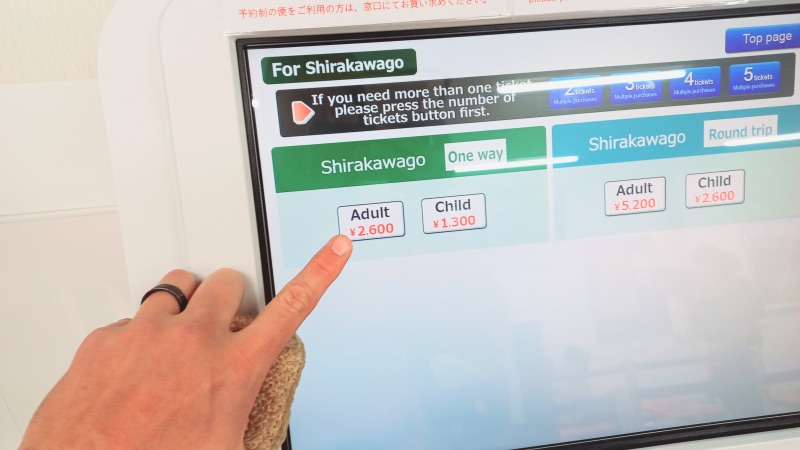
You can take a bus from Takayama to Shirakawa-Go Village. The bus journey takes around one hour and costs 2,600yen (around £13 or $15) for an adult each way (tickets are half price for kids from 6 to 12 years old). Buses run from the Takayama Nohi Bus Station, which is situated next to the Takayama Central Train Station. There is a ticket office and ticket vending machines available; you can pay using cash or bank card.
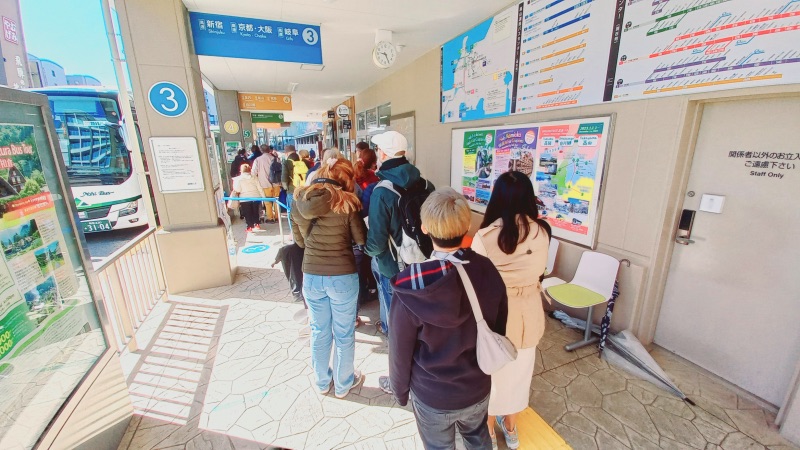
Buses run every day throughout the day, and they are roughly one hour apart. Here is the bus schedule:
RESERVED BUSES
Takayama to Shirakawa-Go Village: 7.20am, 7.50am, 8.20am, 9.35am, 11.20am 12.10pm, 12.50pm, 1.20pm, 2.30pm, 4.20pm, 4.30pm
Takayama to Shirakawa-Go Village: 9.35am, 10.05am, 11.10am, 11.40am, 12.35pm, 1.30pm, 2.00pm, 2.45pm, 3.45pm, 4.35pm, 5.20pm
OPEN BUSES
Takayama to Shirakawa-Go Village: 8.50am, 10.50am, 11.50am, 1.50pm, 2.50pm, 5.50pm, 7.00pm
Takayama to Shirakawa-Go Village: 6.43am, 10.55am, 1.15pm, 3.15pm, 4.15pm, 5.30pm, 7.43pm
Remember – reserved buses mean you can reserve seats in advance. If you turn up on the day you cannot book these buses unless there happen to be spare seats. Some of the bus services are open (non-reserved), which means you can just turn up at the station and purchase your ticket. If there is space on these buses you can get a seat. Don’t worry if you are unable to reserve your seat in advance; you should still be able to get a space on a bus. During busy periods, the bus company provides more buses to cater for the high demand.
Other buses are reservation-only services (which means you have to book a seat in advance on that particular bus). The reserved buses tend to fill up early, so we do recommend booking a seat a day or two in advance.
Due to the popularity of this bus route, it is advisable to arrive at least 20 minutes before the scheduled departure time for your bus (this is particularly true if you have not reserved a seat on one of the reservation-only bus services).
The first bus of the day departs from Takayama at 7:20AM (this bus is exclusively for reserved seats). The final bus of the day departs from Shirakawa-Go at 7:43PM (however, we recommend aiming for the 5:30PM bus to be on the safe side – once the last bus has departed, there are no other options).
Top tip:
Although this is a very popular village, it is generally pretty quiet by around 5PM. By this time, most of the crowds have gone home and there are no more big tour groups in the village. This is a great time to get empty photos and enjoy the tranquility of the village. There is a bus at 5:30PM – it is generally quite easy to get a space on the bus at this time.
Can you visit the Praying Hands Village as a day trip from Nagoya?

Although it is technically possible to visit Shirakawa-Go Praying Hands Village from Nagoya in a single day, we do not recommend doing this. Arranging your trip from Nagoya only allows you a few hours to explore the village. Most of your time will be spent in transit. If you do a day trip from Nagoya, you will only be able to explore Shirakawa-Go during the busiest part of the day. The Praying Hands Village is at its best first thing in the morning and late afternoon.
What is the best museum at Shirakawa-Go Praying Hands Village?

We were particularly impressed with the Myozenji Museum. This is one of the biggest and most impressive buildings in the village. It has 4 floors (including the ground floor) and it costs 400 yen to enter. Swap your shoes for slippers at the entrance (kids’ sizes and large sizes available). This large and impressive house museum has anime vibes. There are beautiful big windows with views of the village. You can see displays including traditional agricultural equipment.
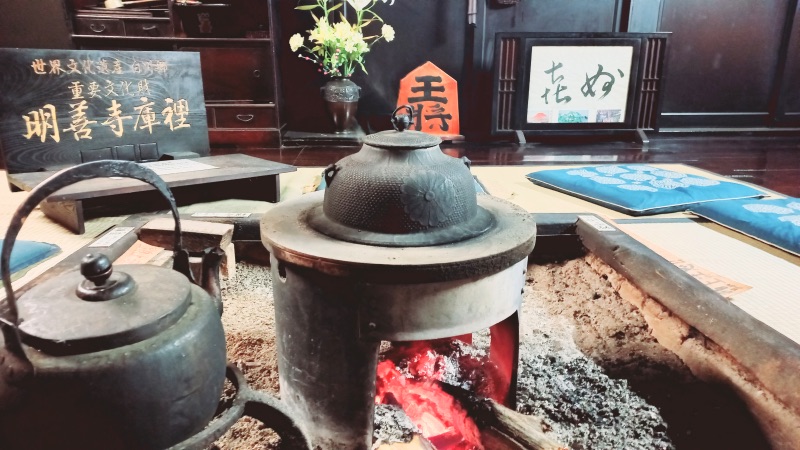
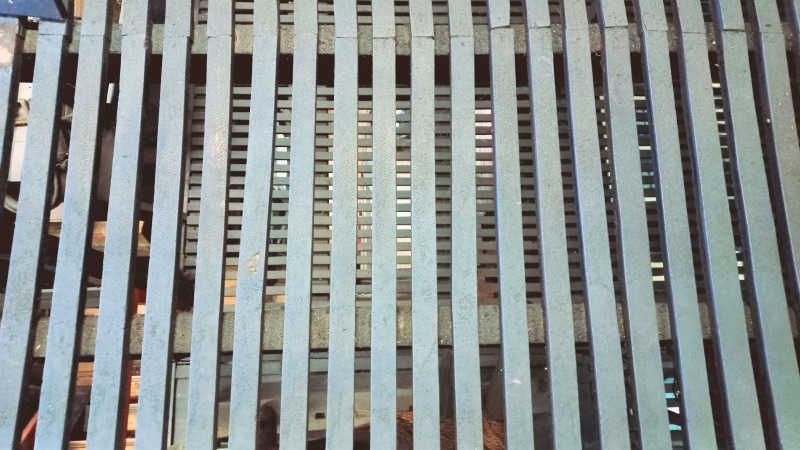
You will notice that the floor has an open structure (with gaps between the wooden slats); this is an intentional design which allows smoke from the fire on the ground floor to dissipate through the house. The smoke helps to preserve the wood as it ages. On the ground floor, you can visit the temple and the Ima to see a traditional Irori fire (used for over 200 years).
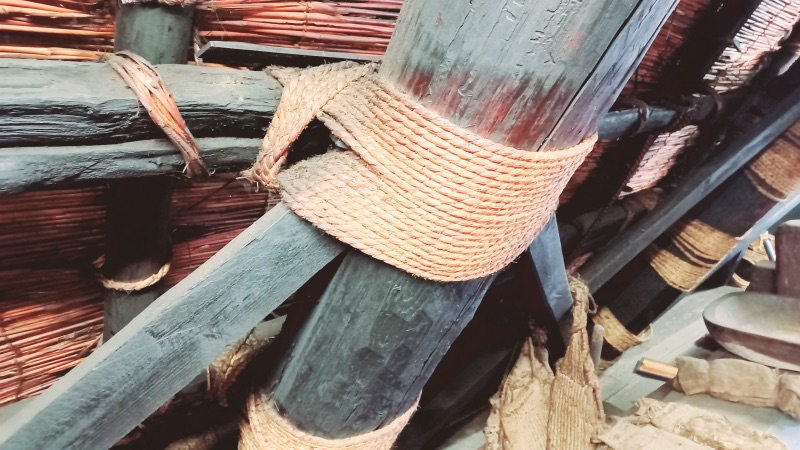
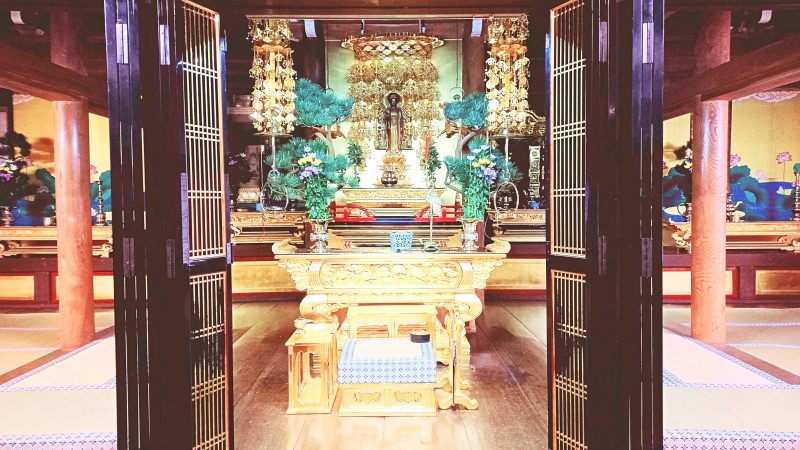
Although this is the largest open house in the village, it is still possible to see it in around 10 minutes. We found that we spent a lot longer exploring this marvelous museum; this building really is packed with history, charm, and character.
What facilities are at Shirakawa-Go Praying Hands Village?
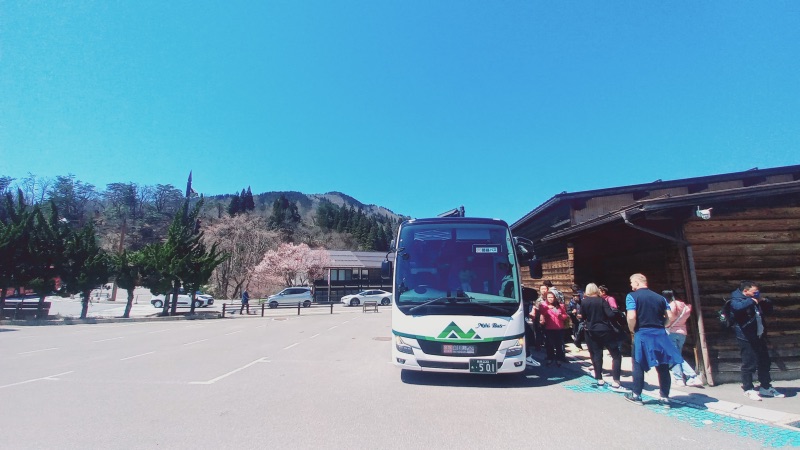
At the Shirakawa-Go bus terminal, you can find public toilets, lockers, large baggage storage, and a tourist information desk with maps and information (including leaflets in a wide range of languages).
In the village, you can find plenty of cafes, restaurants, and street-side food stalls. There are only a few rubbish bins around; it is generally expected that you will take your own rubbish, so we recommend bringing a plastic bag for this. In our experience, there were not many toilets situated in the village. The best option is to use the toilets at the car park or bus terminal. There is a small convenience store situated a few hundred metres from the Shirakawa-Go Bus Terminal. This convenience store sells a range of snacks and drinks, including things like pot noodles, so this is a great choice if you’re traveling on a low budget.
Although there are cafes and restaurants around, it can be a little tricky to find water in the area. We recommend bringing along a water bottle with plenty of water. If you are looking to buy water in the village itself, then we recommend looking out for the small street-side shops where you can buy small water bottles.
What food and drink is available at Shirakawa-Go Village?
The traditional Irori Restaurant has a lovely quaint ambiance. Be aware that it closes at 2PM.
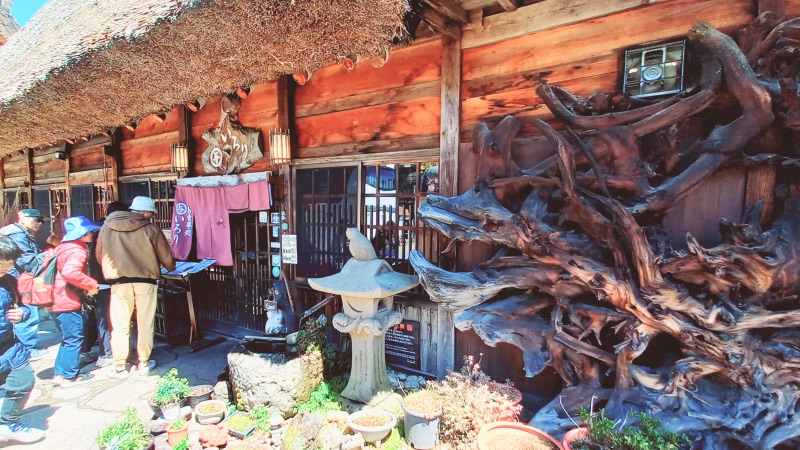
There’s a lot of food and drink available in the village, and there are some very beautiful places to sit and enjoy your food and drinks. Here are some examples of local food and drink that you can buy in the village, along with approximate prices:
- Barbecue Hida beef skewers: 600 yen (around £3 or $3.50)
- Barbecue sticky rice and miso sauce glaze: 300 yen (around £1.50 or $1.80)
- Hida beef sausage: 500 yen (around £2.50 or $3.00)
- Sticky rice balls: 300 yen (around £1.50 or $1.80)
- Hida milk ice cream: 500 – 1,000 yen (around £2.50 – £5.00 or $3 – $6)
- Hot sweet sake: 400 yen (very tasty) Around £2 or $2.50
Most of the shops, cafes, and restaurants close between 4PM and 5:30PM.
Things to bring to the Shirakawa-Go Praying Hands Village
- Water bottle and plenty of water
- Plastic bag for rubbish (there are no rubbish bins in the village)
- Umbrella
- Sunglasses
- Plenty of cash (few places accept bank cards in the area)
- An extra layer because it can get cold in the village
- Raincoat because the weather can change quickly in the mountains
