

Table of Contents
If you’re looking for unique and fun things to do in Takayama in 2025 – this is the article for you. We have included all of the “must-not-miss” activities – to make sure you see all of the best bits.
Some of these activities and experiences that we have featured here, cannot be found elsewhere online. We have also filled the gaps with helpful information such as prices, open hours, locations, transport details and much more.
This article is based on our own first hand research – we adored staying and exploring Takayama – pulling together pictures and information to write this article – just for you. If you’re looking for the Japanese mountain village fix, Takayama really does deliver. In fact, if you can afford the time in your itinerary we do recommend spending at least 3 – 5 days in the area.
However, we understand that you may have a short itinerary. Did you know; you can even take a one-day trip to Takayama from Nagoya? And this is actually fantastic value for money – including both Takayama town and Shirakawa-go praying hands village.
This article is in-depth – so it will be most helpful to anyone staying in Takayama for a few days and exploring the area more thoroughly. If you are able to stay in this beautiful town, don’t miss the authentic and cozy Hostel Murasaki Ryokan (Find Murasaki Ryokan on Agoda or find Murasaki Ryokan on booking.com) – this lovely accommodation is comfortable, traditional and has a lovely sociable vibe. It is pretty central and also some of the best value accommodation in town.
Map of the best things to do in Takayama
Need to pack the best bits into one day? Consider following this FREE self-guided walking tour. The route includes many of the highlights that we feature in this article.
1 Explore the Miyagawa Morning Market

The Miyagawa Morning Market runs along the east bank of the Miyagawa River (between Kaji Bridge and Yayoi Bridge). The full length of the market is around 300m and it takes around 5 – 10 minutes to stroll the length of the market. The Miyagawa Morning market runs from 8 AM – 12 PM daily.
You can experience a wide range of local street food treats and snacks. Here are a few of our top picks: don’t miss Tamaten (made from egg white and sugar). It is super unique and very tasty. It is somewhere between a marshmallow, a macaroon and meringue. The Tamaten kiosk is located towards the north side of the market (look out for a little shop to the right if you are walking north up the market).

You can even enjoy a coffee in a cookie cup (yep, you read that right—drink your coffee and then eat your cookie cup). There are also a couple of stalls selling Japanese waffles and pancakes. Alternatively, keep your eye out for fresh croissants if you’re looking for a more familiar fix. There are also several gift shops with dried fruits, pickles, and Japanese gifts. If you are traveling with kids, you can also buy fish food and feed the fish in the river.
2 Walk along the Takayama Traditional Heritage Street

The Takayama Traditional Heritage Street is one of those must-see attractions in Takayama. Every guided tour hits this one – so you do need to make sure this is in your itinerary. It is easy to tie this one in with the Miyagawa Morning Market – just stroll down the market and cross the road. The street’s name is Kamisannomachi Street – but rarely do people refer to it by this name: Generally it is just referred to as “The Takayama Heritage Street”.

Along Heritage street, you can see traditional Edo-period Japanese buildings. Many of the buildings are used as shops and cafes. Watch out for the Japanese water puppet. We also recommend a stop at Ohnoya Homemade Miso, where you can try traditional homemade miso.
It is important to recognize that the Takayama Traditional Heritage Street is a very popular attraction and tends to be very busy throughout the day. If you’re hoping to get some beautiful empty shots of this street, you will need to arrive quite early (ideally around 7:00 AM or earlier). The heritage street is normally crowded with tourists but it is also open to traffic so watch out for cars and bikes as you explore.
3 Explore the Higashiyama Walking Course

Don’t miss this lovely hidden gem to the east of Takayama. The Higashiyama Walking Course is a beautiful set of temples and paths – which only takes around 10 – 20 minutes to explore. There are 4 temples in this area (Unryu Temple, Kyusho Temple, and Higashiyama Temple and Daiou Temple).

You can walk between the temples and enjoy beautiful views over Takayama town. We were particularly impressed with the Daiou Temple (located at the bottom of the complex). This lovely temple is surrounded by beautiful gardens and a lovely pond. This is a great place for some photography. Watch out – there are bears in the area – always be vigilant. If you do encounter a bear, back away slowly without turning your back on the bear. Leave the area calmly, quietly without startling the bear.
4 Cook a meal on an Irori

This is one of those “things to do” that you may not think of – or read about on other blogs. Cooking on an Irori was genuinely one of our TOP highlights of Takayama – and out kids loved the experience too. So we really do recommend this experience. But cooking on a traditional Irori – Japanese open fire – really is a unique and fun experience. There are a few things you will need to work out to do this:
Firstly you need to book yourself into a Ryokan that actually has an Irori available to guests. This is not common – so we recommend Murasaki Ryokan. Guests can use the Irori for an additional fee – the staff will prepare and light the fire for you – and also include cooking utensils, kettle and tray for cooking. Reserve this in the hostel a day or two in advance.
Next, you will need to consider food. There are a couple of supermarkets in Takayama offering a range of food. For example; Check out Sato Family Store Kokubunji-ten a few hundred meters to the west of Kaji Bridge. Alternatively try Surugayahonmachiten on Honmachi Dori, 5 minutes to the south of Kaji Bridge. Expect to pay around 2,000 – 4,000 yen for food for a small family. (around £10 – £20 or $12 – $25) You can pick items like: Tofu, Hida Beef (a very tender fatty Wagyu beef) and veggies like corn and deep greens and sweet potatoes. And finally, grab some tasty drinks and have fun!
5 Visit the Takayama Traditional Culture & Crafts Square
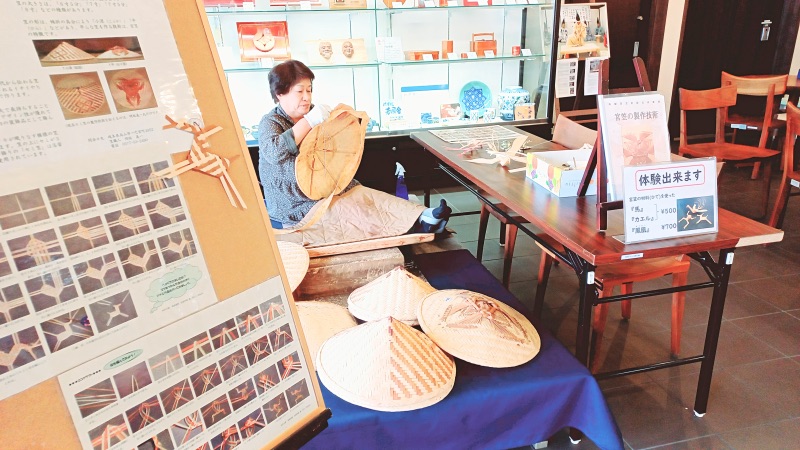
If you’re hoping to connect with the traditional culture and arts of Takayama make sure you drop in to the Takayama Traditional Culture & Crafts Square. This one is tricky to find because it is not listed on Google Maps – so you will need to use our pin on the map at the top of the article.
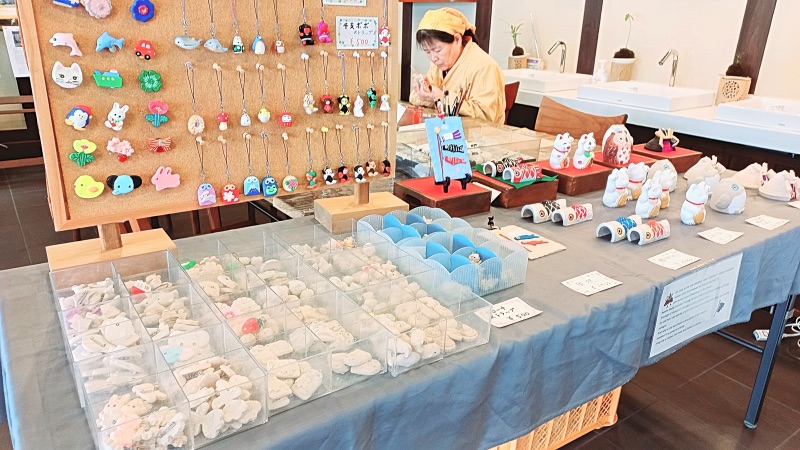
They have demonstrations and a range of craft experiences: Don’t miss the Mayagasa demonstrations – traditional woven hat demonstrations run daily from 10am – 4pm. Craft Experiences include Traditional Braiding, Bamboo lamp making, Clay Doll Painting and Woven Horse Crafting. Experiences run throughout the day (starting at 9 – 10am each day) and finish in the afternoon (normally around 3pm – 4pm) Entry is free but you do need to pay for experiences, for example the braiding experience costs 2,200 yen (roughly £11 or $15).
6 Visit the Nakabashi Red Bridge

Nakabashi Red Bridge is one of the most beautiful and iconic spots in Takayama (and a top Insta spot). Many people travel to Takayama to get their classic Japan shots at this bridge. Take a little time to enjoy the scenery and get some photographs. Also, if you are visiting during blossom season (which is slightly later in the mountains), there is a nice cherry blossom tree on the southeast of the bridge.
You can get nice photos including the blossom tree and the bridge from this spot. Once you have finished photography, cross the bridge and walk to the Takayama Jinya (which is situated just on the other side of the bridge).
7 Explore the Takayama Jinya

Make sure that you plan a visit to the Takayama Jinya. This is a fantastic opportunity to learn about the culture and heritage of Takayama and explore a traditional building (which is not actually a temple or religious building). Takayama Jinya is a traditional government building. This is a great place to learn about the samurai culture and history of the region. Takayama Jinya has been developed over the years. Here are a few significant dates to help give you some context and background: 1600s, this building was used as the largest (and oldest) storehouse in Japan. 1832: Front gate built. 1816: Main buildings constructed.
The staff at Takayama Jinya are very friendly and love to help you learn about the history of the building. Entry costs 440 yen for adults. High school students and younger are free of charge. Takayama Jinya is open daily from 8:45 AM to 5 PM (April to October) and 8:45 AM to 4:30 PM (November to March). It is closed from the 29th of December to the 3rd of January.
8 Take a dip at the Utopia Inari-yu Onsen

If you want a classic Japanese experience, we highly recommend that you visit an onsen. This is a public Japanese hot bath where you bathe naked (unisex baths), so if you are uncomfortable with the idea of getting your kit off around strangers, you may want to skip this activity. Utopia Inari-yu Onsen does not have any private onsen facilities.
The Utopia Inari-yu Onsen is a tattoo-friendly onsen (which is actually pretty unique in Japan). It is also surprisingly affordable, costing only 460 yen for adults, 180 yen for kids from 6-12, and for kids under six, entry only costs 100 yen. All the onsens are indoors, and three baths are available. This onsen is open from 2:30 PM until 10 PM and is closed on Tuesdays. You can buy shampoo or body soap at the front desk or bring some along. Towel rental costs 100 yen for a big towel and 50 yen for a small one.
If you do visit this onsen it is important to follow a few simple cultural rules: Before entering the communal bath, thoroughly wash and rinse your body in the designated shower area. Enter the onsen naked, as swimsuits and towels are not allowed in the water. Keep long hair tied up and refrain from swimming or splashing. Be mindful of your noise level to maintain a peaceful atmosphere. Never wash with soap in the Onsen and don’t dip your towel in the water. Always dry off with a towel before returning to the locker room to keep the area clean and safe.
9 Visit the Ipponsugi Hakusan Shrine
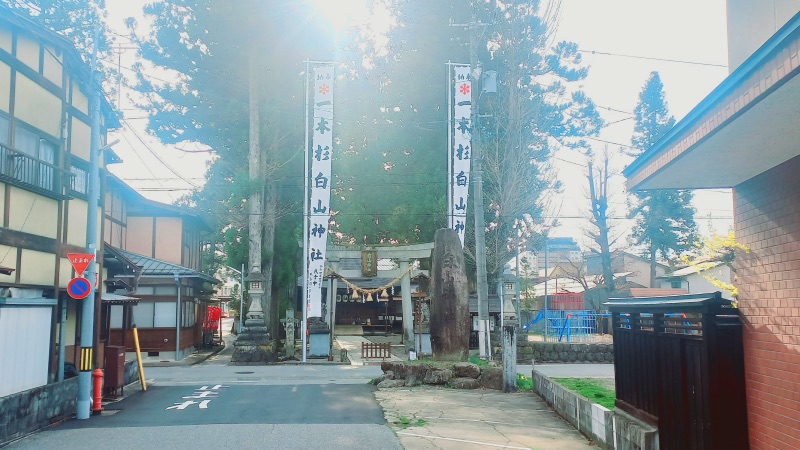
If you’re looking to explore a quieter and lesser known temple check out the Ipponsugi Hakusan Shrine (situated right next to Utopia Inari-yu Onsen). This temple has a lovely authentic aesthetic with a large wooden Torii Gate and Japanese architecture & artwork. It is free to enter and explore this temple. This is also a great spot for anime fans; this temple appears in the anime Hyouka (the shrine in front of the home of Houtarou Oreki, the main character). We wouldn’t necessarily recommend going out of your way to find this shrine – but if you’re looking for a quieter spot – or if you’re visiting the Onsen, Ipponsugi Hakusan Shrine is worth a look.
10 Explore the Hida no Sato Open Air Museum

Hida no Sato is an open-air museum (also referred to as the “Hida Folk Village”). One entry ticket includes access to the whole site and it only costs 700 yen (around £3.50 or $4.00). No need to pre-book – you can just turn up and buy your entry ticket. Allow an hour or two to explore the village. In the village you can learn about traditional agriculture, crafts, and domestic life in a traditional village. You can explore a collection of traditional wooden houses with the iconic praying hand roofs. They also have craft demonstrations and hands-on activities. Hida No Sato is a very pretty hamlet – bring a camera and plan some time to get some beautiful photos.
Hida No Sato is around a 30 – 40 minute walk from the centre of Takayama. If the walk is too far you can also take a bus from the bus terminal situated outside the Takayama Central train station. Hida No Sato is open daily from 8.30am – 5pm. Allow around 2 – 3 hours to explore the village properly.
11 Try Fresh Homemade Ramen

If you continue the loop walk, we recommend stopping at Le Midi Ramen Restaurant. This is one of the most affordable and authentic ramen restaurants in Takayama. Prices range between 700 yen to 7,800 yen for a delicious bowl of fresh homemade ramen. This restaurant has a lovely local feel, giving you that authentic Japanese “hole in the wall” experience. After filling up on a tasty bowl of ramen, keep walking north until you reach the Ninja Cafe.
12 Ninja Cafe

If you’re looking for a fun, quirky, and unique Japanese experience, we highly recommend that you stop by the Ninja Cafe. They offer a range of food, drinks, and experiences. You can either buy food and drinks a la carte or you can get packages that include food and drinks with a ninja experience. For example, it costs 2,750 yen for a costume and drink. Alternatively, you can pay 4,950 yen for training, drink, and costume. If you just want something to eat or drink, prices range between 600 – 1,600 yen.
13 Hida Kokubunji Temple

We highly recommend a visit to Hida Kokubunji Temple. This is a very small and unique temple situated in the centre of Takayama (so you don’t need to go too far out of your way to see this temple. Hida Kokubunji Temple has a prominent three-tiered pagoda which dates to the Muromachi period. It is an ancient 1,200-year-old temple. You can also see a large and very impressive ginkgo tree in the temple grounds. It is free to enter the temple grounds. It only takes around 5 – 10 minutes to see everything and take some photos – so this is more of a “passing by” activity.
14 Visit the Mountain Onsen Village

Looking for an adventure – why not visit the Mountain Onsen Village of Hirayu. This charming village is situated in a mountain valley around 1 hour from Takayama by bus. There are several onsens in the village to choose from: The Hirayu-no-yu Public Onsen is a free public hot spring. You really can just show up and take a dip (the onsen is unisex and not exposed to the public – and it also has a changing room). You can also visit the Hirayu-No-Mori Hotel Onsen nearby. This onsen is open to the public for a very reasonable price of 700 yen (they also have private onsens for 3,000 yen for 45 minutes). People with tattoos are welcome in both of these onsens.
Buses from Takayama Central bus station depart roughly every hour and the journey costs 1,600 yen each way (Roughly £8 or $10). There is a short five-minute walk to find the onsens in Hirayu.
15 Visit Shirakawa-go Praying Hands Village

And last but definitely not least – we highly recommend a visit to the UNESCO Shirakawa-go praying hands village. It is free to enter this village and explore – but there is a small cost to explore the house museums (normally around 300 yen to enter a house museum and explore). In the village you wan walk around beautiful pathways between the houses and you can also sample local food such as Hida Beef skewers and Hida Milk ice cream. We recommend allowing a full day for this activity. If possible try to reserve a seat on a bus at least one day in advance (this is a busy route!).

To reserve a seat, just turn up at the Takayama bus station outside the Takayama central train station. The bus journey takes around one hour and costs 2,600yen (around £13 or $15) for an adult each way (tickets are half price for kids from 6 to 12 years old). Although this is a fantastic experience – Shirakawa-go can also be a challenging and intense day. We have published a very in-depth and detailed guide on the Praying Hands Village to help you plan your visit; this includes bus times and details, things to see and do and much more. If you’re going independently check out of Free and Self-Guided walking tour of Shirakawa-go
