
Table of Contents
In this article we are going to explore the difference between homeschooling and worldschooling. Worldschooling is a relatively new, exciting and emerging approach to education. Although it is similar to homeschooling there are also some fundamental differences.
As a new educational approach worldschooling is not well understood. Furthermore, to add to the confusion there are a range of different opinions on exactly what worldschooling is.
In a previous life we were both teachers. We have taught in the UK and all over the world and observed a range of different educational styles and philosophies. We have also seen some of the problems and issues with traditional educational styles. More recently we broke away from the system and have started worldschooling our two beautiful boys.
Don’t miss our FULL GUIDE to worldschooling and our TOP TIPS for worldschooling
Why worldschooling?
If you are considering world schooling there are lots of things to think about. That’s why we have a whole section of articles about worldschooling on our website. One of the BIGGEST BARRIERS to long-term travel for families is their children’s education. Is it possible to educate your own children on the road? If so, what resources and support is available? Will a child be disadvantaged by worldschooling?
Find out more about the advantages and disadvantages of worldschooling
What is worldschooling?

Worldschooling can be summarized in the following philosophy: The world is your classroom.
Worldschooling is an approach to education in which a child is exposed to a wide variety of experiences, activities and environments to stimulate, enrich and consolidate learning. Within the worldschooling concept there is a wide range of approaches, styles and curriculum.
Worldschooling is not exactly the same as homeschooling. The main difference between homeschooling and worldschooling is in the primary (main) learning environment. For homeschooling families the home provides the primary learning environment for children. Homes can be filled with learning resources, books, activities and records of children’s work.
On the other hand, for worldschooling families the primary learning environment is out and about in the world. There may be some time for written work – but this could happen anywhere. Whether it’s reading on a bus, journaling at a temple or painting by a volcano.
In many cases worldschooling families educate their children in a wide range of different countries, usually away from their home country. Resources like textbooks are limited by backpack space.
Why do people choose worldschooling?

There are a wide range of reasons that people choose to withdraw their child from formal traditional education system and start worldschooling. And there are also specific reasons that families choose worldschooling over homeschooling. Here are some of the biggest reasons that people choose to worldschool their children:
– Desire for challenge, adventure and family time
– Dissatisfaction with traditional education settings (may include specific problems like bullying)
– Concern over moral, political and religious agendas being pushed in state maintained school systems
– The desire for holistic education (emphasis on skills, compassion, character development and understanding)
– The belief that real context and experience is the best environment for meaningful and long-lasting learning
– The Aspiration to expose children to a greater variety of challenges, experiences and cultures
– The desire for flexibility and personalized learning
– The need to give a child more direct one to one support (especially for an SEN child who may “fall through the gaps” in a busy school)
These are just common motivations for worldschooling families. There may be other things too. These things are personal. We would encourage you to be strong in your own decisions. Ultimately we all want the best for our kids so it is important to be allowed to make balanced and informed choices.
How is worldschooling different to home schooling?

The most fundamental difference between homeschooling and worldschooling is the primary (main) learning environment. Home schoolers may take trips out and about into the local community – but the learning is mostly based in the home. On the other hand world schoolers may spend some of the day indoors – but most of the learning happens out and about. Each approach has its unique advantages and disadvantages. Here are some of the differences between home schooling and worldschooling:
| Home schooling | Worldschooling |
| Home schoolers can use bigger resources (musical instruments, science equipment and textbooks) | Worldschoolers have an abundance of new exciting opportunities – Every location presents a chance to learn. Life is one big school trip. |
| Easier for home schoolers to join networks and find social opportunities for children. | Greater variety of experiences to learn from and reflect on. Very enriching. Constant application and consolidation. |
| Stability and consistency of the same environment. Creates more stability and natural routines. | Opportunity to develop wider range of adventure skills (free diving, climbing, skiing, mountaineering) |
| Consistent local resources (libraries, parks, fitness centres) | More enriching cultural learning opportunities. History, religion, culture, politics, physical geography, biology and so on. |
| Consistent access to local clubs and activities. E.g. schools, community centres and churches. | Cross-curricular learning very natural – transition between subjects easily and naturally |
| Homeschoolers can have a bigger range of physical books and textbooks | Chance to meet and interact with a wider variety of new people from different backgrounds and cultures |
| Easier to record and store children’s work to show progress and celebrate achievement | Most work and books need to be digital. Less face-to-face support – so parents and children need to be more independent |
Can you both homeschool and world school children?
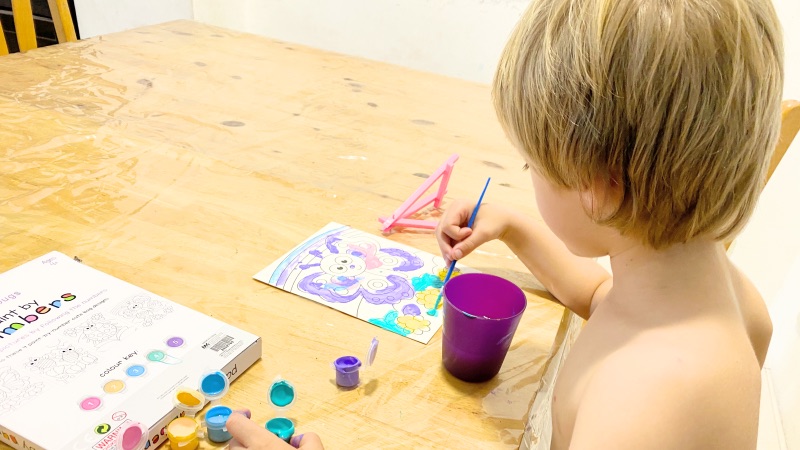
Yes, it is possible to do both homeschooling and world schooling. These are approaches to education – rather than mutually exclusive categories. Some people treat world schooling as a type of homeschooling. Other people see them as different but related approaches.
The line between homeschooling and worldschooling is not clear cut. Some homeschooling families may take extended trips in order to expose their children to a wider variety of experiences and activities. Furthermore, some worldschooling families may slow down for a season and lean towards a homeschooling approach to their child’s education.
It is possible for a particular family to do both a bit of worldschooling and homeschooling. As a family we have leaned strongly towards worldschooling because we are backpacking long-term and full-time with our children. But we do have periods of slower travel where we focus on more traditional learning styles and activities.
How do you start worldschooling?

There is so much to think about this is just a brief introduction to help you get to grips. There are various things you need to do in order to transition into worldschooling.
If you are planning a big long-term change here are some of the things you will need to do.
Firstly, you will need to de-register your child from formal schooling. The process depends on your country. Be aware that it may not simply be a case of registering your child as “home schooling”. In the UK for example, families that register for “home schooling” need to be available for meetings and reviews from the local authority. If you’re planning to world school instead you may need to register for education overseas or another category. The best way through this is to contact your local authority and discuss your plans.
Once all the official boxes are ticked you can do the exciting part – plan your trip. Where will you go? What learning opportunities can you utilise? Which resources can you take? What curriculum will you use? (if any) What projects or work can children do? How will you assess their work? And so on.
Spend time thinking about what things you will bring. Will you use a tablet or laptop as a digital tool. Can you get a subscription to a resource like Twinkl or ABC mouse? What about a digital library subscription such as the Open Library? Consider learning apps you might like to use. Things like Seek by iNaturalist (an app that allows you to use a phone camera to identify a wide range of plants and animals). Also consider whether you wish to purchase a digital textbook.
What other types of alternative education are available?
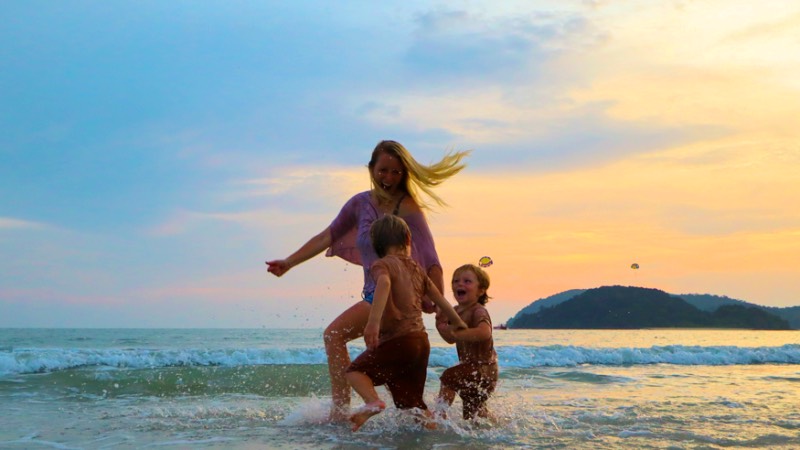
AND finally. What other alternatives are available. We have discussed worldschooling and home schooling in this article.
Unschooling
There is also unschooling. This is a student-led process where children learn at their own pace when they are ready. Learning is motivated by need, interest and natural curiosity. As children “do life” with an adult or caregiver – they take and interest, get involved and learn through experience. This is a less intentional and more passive approach to learning. No targets, learning objective, formal goals or assessments. Just the innate capacity and desire to learn.
Road schooling
Road schooling is an approach to education used by families who live and travel in campervans, caravans, converted buses and RV’s. This is somewhere between homeschooling and world schooling. You may be thinking “why does road schooling deserve its own special label”? Put simply, road schooling is a distinct approach with its own unique challenges, advantages and disadvantages. Road schooling allows more physical resources than world schooling. But there are often still serious limitations on space compared to homeschooling. Road schooling is more mobile and offers more new experiences than homeschooling. Road schooling also has its own rhythm and structure.
