Table of Contents
What are the advantages and disadvantages of worldschooling? And is worldschooling worthwhile? In this article we are going to share our experience of worldschooling. And we will also discuss some of the advantages and disadvantages of this emerging approach to education.
We are both teachers who have worked in the UK and overseas. We have experienced a wide range of education systems with different philosophies and approaches. A few years ago we made the bold decision to take our boys overseas and worldschool along the way. We are very excited to share our journey and experience with you.
Worldschooling is a form of alternative education which is very similar to homeschooling; the main difference is that children are educated as they travel. The world is their classroom. Children learn from a wide range of activities and experiences and are constantly immersed in new cultures.
If you are considering world schooling weighing up the advantages and disadvantages should help you make an informed decision. We also have plenty of TOP TIPS for worldschooling to equip and inspire.
The advantages and disadvantages of world schooling summary table
We wouldn’t be teachers if we didn’t geek it up with a good table. Here is a summary of the advantages and disadvantages of worldschooling. Read on for more…
| Advantages of worldschooling | Disadvantages of worldschooling |
| Enjoyment of learning Character development Social and inter-personal skills Long term memory development Cultural enrichment Personalized learning Holistic education Better family relationships | Lack of academic support Challenges to create structure and routine Lack of traditional resources Lack of long term relationships The challenges of transitioning |
Why is there a growing trend towards worldschooling?

In recent years there has been a growing trend towards worldschooling. Many families are exploring alternative ways to live and it is becoming increasingly common for people to make a remote living online. The increasing trend of online work is creating more freedom and opportunities for people to break away and travel with their kids – which immediately raises the question of educating kids on the road. We hope that this article will help you weigh up some of the advantages and disadvantages of worldschooling.
Considering Worldschooling? You may ALSO be interested in our guide to the 5 BEST Affordable Countries for Digital Nomads
What are the advantages of worldschooling?
Before we look at some of the disadvantages and challenges of worldschooling we are going to consider some of the advantages of worldschooling. You can probably tell that we are massive advocates for worldschooling. We absolutely love the way that it has helped us get to know our children and grow as a family.
1 Enjoyment and love of learning

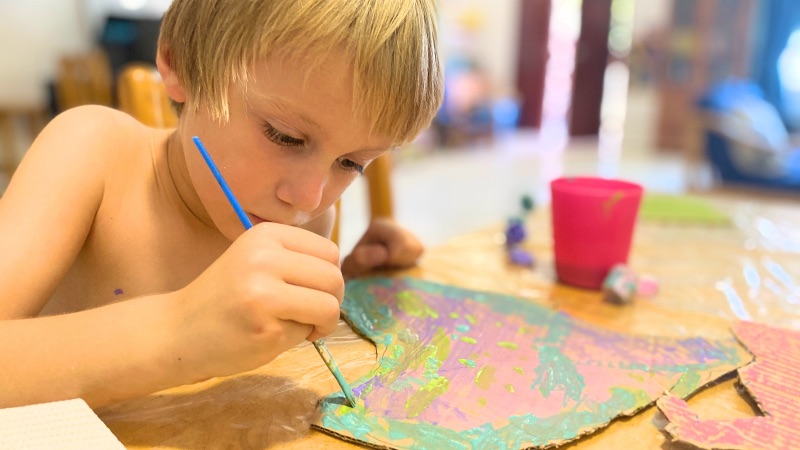
A very significant advantage of worldschooling is the effect it has on a child’s attitude towards learning. When children associate learning with fun, experience, adventure and challenge they develop a deep intrinsic motivation to learn. Learning is not some abstract thing that is “out there”. Instead children are constantly immersed in things to learn – and learning happens very naturally. Worldschooling is an amazing way to stimulate a genuine enjoyment and love of learning in a child.
2 Character development

Travel constantly presents children with new challenges and experiences. This can develop a deep sense of self-confidence and optimism in a child. The uncertainties, challenges and lack of comfort that are associated with travel can help to create a determination and strength in worldschooling children. It is worth adding that the parent has a big role here. Simply being exposed to challenge and adversity may not be sufficient to produce positive results in a child. It is important to model positivity around your child and to help them associate challenge with reward and fulfillment. If we have been through a challenging travel experience, we generally try to balance it out with a fun treat and talk about how we thrived through the challenge.
3 Social and interpersonal skills

Worldschooling is an excellent way to develop a child’s interpersonal skills. Children constantly get the opportunity to meet people and talk to them across cultural and linguistic barriers. Children need to learn to use body language, eye contact and creativity to communicate effectively. As worldschooling children learn to make friends with other children from different cultures, they become more open minded and aware of their own culture, values and background.
People wrongly presume that children will not develop social skills if they are taken out of the mainstream school system. However, in our experience the traditional school system creates an environment that is socially artificial and can sometimes hinder a child’s social development. In mainstream schools children often form alliances rather than real relationships and children struggle to find their identity in a crowd. Children act out to stand out. Not to mention consistent issues with bullying and rivalry. Don’t hear us wrong. Some amazing things happen in a traditional school system and children can develop deep and meaningful relationships in school. This could even be one of the potential challenges to taking a child out for worldschooling. However, we think it is wrong and simplistic to suppose that homeschooling and worldschooling is socially inferior to the traditional school system.
4 Development of long-term memory
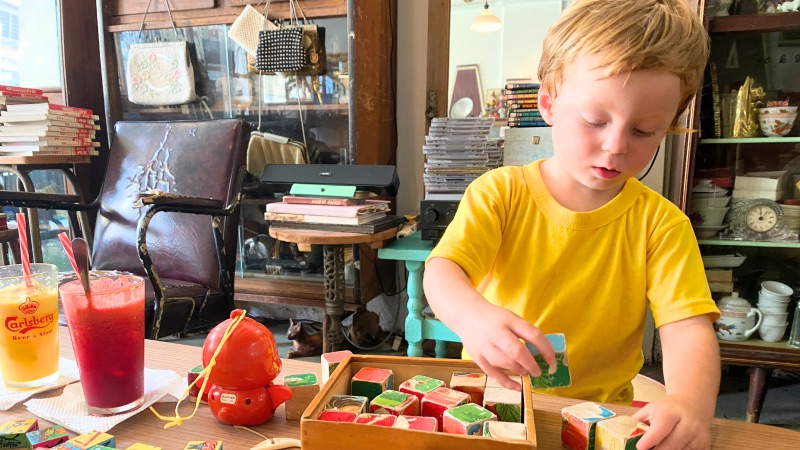
One of the lesser appreciated benefits of worldschooling is the effect on a child’s long-term memory. Even from a young age we have found travel to be a very enriching and positive way to expand a child’s memory. Showing children photos from places they visited a long time ago can help to stimulate memories and build a child’s capacity for long term memory recall. If a child’s experience is constantly varied and changing, the brain cannot collapse and compress memories.
5 Cultural enrichment
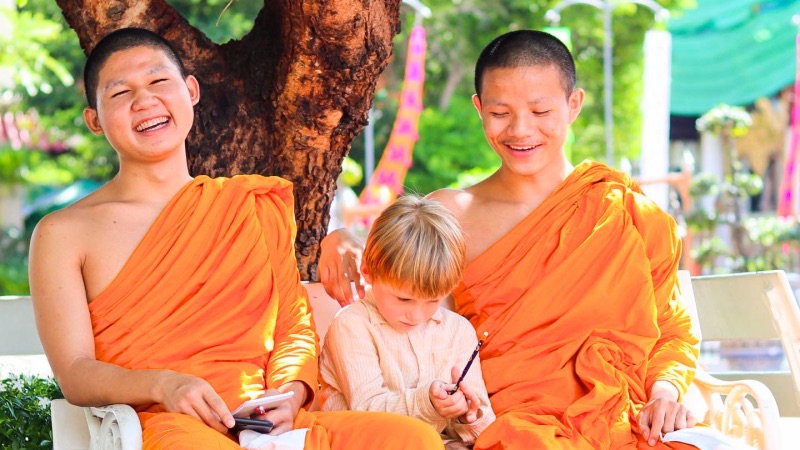
Another big advantage of worldschooling is the constant cultural enrichment. It has been wonderful to see our boys spotting the nuances of different cultures. As we travel from country to country our children have noticed different food, different clothing, different religions and different attitudes and values in people. Worldschooling presents constant opportunities for children to get to know people, talk to locals and understand culture more deeply and richly. It has also been great for us as parents to travel with our boys. We have found that children break down barriers and allow you to have conversations and connections with local people more freely and quickly.
6 Personalized learning

Every school talks about personalized learning. This is because personalized learning is a very powerful way to promote deeper understanding and faster progress. However, in reality it is almost impossible for a school to deliver a personalized learning curriculum. Genuine personalized learning can only happen when a child has has a significant amount of one to one support and feedback. As a worldschooling parent you can give one to one objective feedback and personal targets for your child. Many homeschooling parents comment on how quickly they can progress through concepts and content leaving more time for fun! This is true for worldschooling too.
It is worth adding that a worldschooling parent may be tempted to spoon feed their child too much. This can lead to a child lacking independent learning skills and lacking the ability to self-assess and self reflect. Therefore, we recommend that you give your child plenty of one-to-one attention but also be aware of giving them space to develop independent learning skills as well.
7 Holistic education

We have already mentioned that worldschooling lends itself to holistic education. Holistic education is about educating the whole child – mind, body and spirit. It is not just about promoting knowledge and understanding. Holistic education focuses on developing a child’s emotions, personality, character and inter-personal skills. When you are worldschooling we recommend intentionally doing a wide range of activities. Find opportunities to push yourself out of your comfort zone and learn something new together.
8 Family relationships

Another massive advantage of worldschooling is the effect that it can have on family relationships. At times worldschooling can be very challenging and even stressful. However, world schooling can also be deeply enriching for your family relationships. Family travel allows you to spend more time together as a family, get to know each other more deeply and find ways to support each other when things get tough. Sharing unique and beautiful experiences forms memories and bonds that unite you as a family.
What are the disadvantages of worldschooling?
Worldschooling does also have some disadvantages. Here are a few of the things that can be challenging for worldschooling families:
1 Lack of academic support
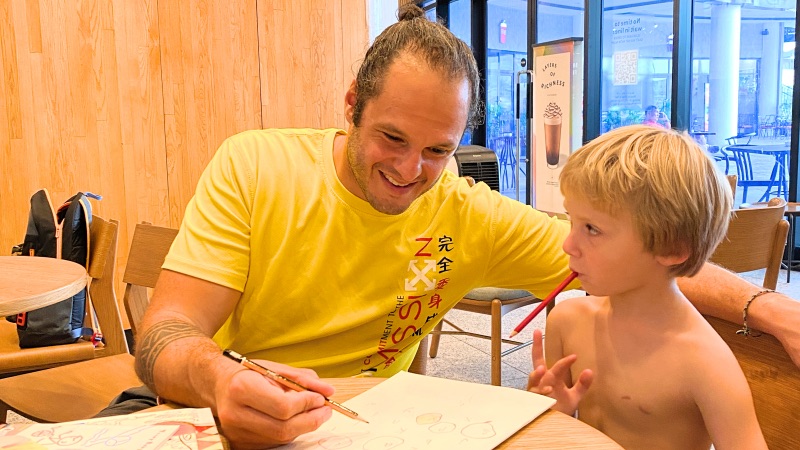
One of the big challenges of worldschooling is the lack of academic support. This becomes a particularly challenging issue when children are older and advancing to more complicated subjects. Ultimately, if you are a worldschooling parent you will probably be your child’s main source of academic support and help.
It is very important that worldschooling children are able to develop independent learning skills and draw on a wide range of resources and tools to progress in their learning. There are also ways to ensure that your child progresses academically and has the support they need. For example, parents of older children may consider enrolling their children into a digital school or an online learning college. There may be ways for your children to do work and submit their work digitally to get feedback.
2 Lack of structure and routine

One of the big challenges for worldschooling families is generating consistency, structure and routine. It is not impossible to do this, but this can be a real challenge. When you’re traveling
your environment is constantly changing. This can make it difficult to form habits and routines that help your child develop in a consistent way. For example, you may find that your child is more successful at written work first thing in the morning but you need to check out of a room early to catch a bus. As a worldschooling family we have found it very important to have slow down months where we try not to move around too much. We will still see and do lots of great things locally. But we take time to build structure and routines. We then take a month of faster travel and fit schooling in around this. It is all about finding your rhythm as a family.
3 Lack of traditional resources

Another challenge of worldschooling is the lack of traditional educational resources. The following resources are unlikely to be available to a worldschooling family: Musical instruments, equipment for design technology and craft, sports equipment and laboratory equipment for science investigations. We recommend that you find opportunities to give your child hands-on experiences. It could be that your child takes a local music class, or perhaps a cooking class. Perhaps you can visit an interactive science museum or university lab. Maybe your child can join a sports group temporarily. There are ways to give your child experience with physical resources that you may not be able to carry in your backpack. We recommend that you spend some time planning and preparing worldschooling resources before your adventure. Don’t miss the EPIC Twinkl website for amazing digital resources – perfect for travelling families.
4 Lack of long term relationships

Another disadvantage of worldschooling is the ability to form long-term relationships. We already mentioned that worldschooling can be very enriching, and traditional school systems have their own social challenges. However, one of the big advantages of the traditional school system is that children learn to form long-term relationships with their peers. If you are planning to worldschool it is very important to talk to your children about the relationships and friendships and be sensitive to their needs. look for opportunities to make friends and socialize on the road. But we also recommend that worldschooling parents are sensitive to their child’s social needs and desires and willing to integrate into a more consistent environment if that is what the child needs.
5 The challenges of transition
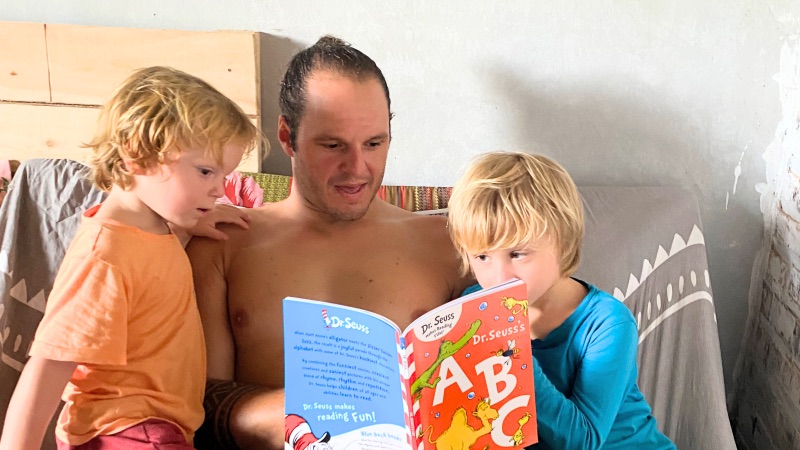
Another challenge of worldschooling is the process of transitioning in or out of traditional school. For example, if you are starting worldschooling With a child who has already started traditional school, they may find it difficult to transition to a new style of learning and a fundamentally new way of life. The process of transitioning a child out of the traditional school system is sometimes called “deschooling”. On the other hand, if you’re planning to return to a traditional school after a period of worldschooling, this can also present a wide range of challenges.
Your child will need to adjust to a new social environment, a new institution and they may also have “gaps in their learning” to contend with. This can leave a child feeling insecure and “behind in their learning” (even if they have advanced in other areas that the school is not assessing). If you are planning to transition into a school system, it may be worth discussing what content the school has been covering recently and focussing your worldschooling on the same material.
Is worldschooling better for a child’s academic development?
One of the biggest obstacles to worldschooling is the fear that it will put a child at an academic disadvantage. This is a real possibility and we recommend that you consider this carefully before you start worldschooling. Whether a child will be disadvantaged by worldschooling depends massively on the family and the child. In some cases, worldschooling could put your child at an academic disadvantage and in other cases it could actually put your child at an academic advantage.
In our opinion, even if your child is at a small academic disadvantage, it may well be the case that the holistic benefits outweigh the academic disadvantage. This is a personal decision that each family needs to make.
Furthermore, the holistic benefits of worldschooling may well be conducive to more successful and effective learning in an academic context. Worldschooling does lend itself to developing specific academic skills such as independent learning, recognising application and context for learning and the ability to self-reflect and self-assess.
What is the best age to start worldschooling?
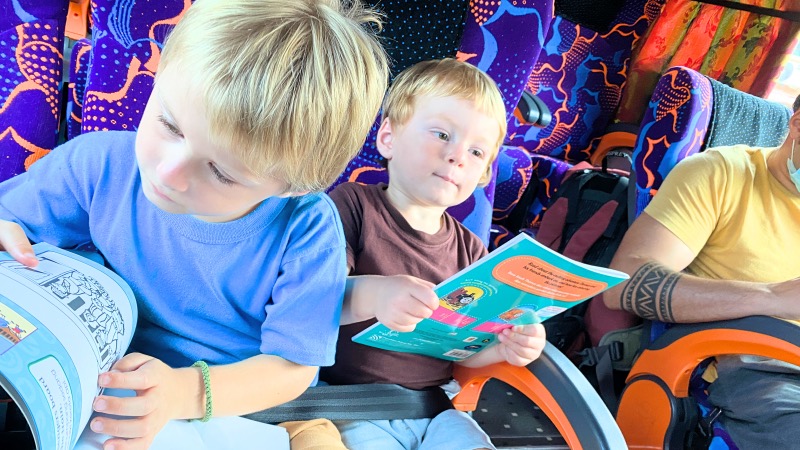
We have considered some of the advantages and disadvantages of worldschooling. In general some of the disadvantages will become more significant as children get older and progress in learning. For example, academic support is more likely to be challenging with an older child who is studying more sophisticated concepts at school. Furthermore, older children will have developed stronger long term relationships and may find it more difficult to transition into
worldschooling. On the other hand, older children should have developed stronger independent learning skills and should be able to adapt to a more independent style of learning. They may be able to use internet tools to research and study leading to effective learning with minimal need for support. It is all about knowing your child and their strengths to work out whether worldschooling is a good choice for you as a family.
Summary: what are the advantages and disadvantages of worldschooling?
We have explored some of the advantages and disadvantages of worldschooling. However, trying to work out whether worldschooling is worthwhile will depend on your individual priorities and your needs as a family. Some families may find that the advantages of worldschooling outweigh any of the disadvantages. On balance they may feel that worldschooling is the best choice. On the other hand some families may find that some of the disadvantages are too big to overcome.
