
Table of Contents
In this article we are going to share and recommend the best worldschooling resources in 2026.
Finding engaging and appropriate learning resources is one of the biggest challenges of worldschooling. And if your child’s education is a priority to you, then you will want to make sure you get the best stuff.
There are lots of things to consider before worldschooling. Finding THE BEST resources is one of them. So how do you work out the best resources? And how do you make sure you have space for the things in your backpack?
We were both teachers before we broke away and went travelling full time. What’s more, we both love education and we are fascinated by the world. We now worldschool our two beautiful boys full time and we are super excited to share our tips, advice and experience on worldschooling with you.
Don’t miss our FULL GUIDE to worldschooling
What is worldschooling?

Worldschooling an approach to education which enables students to learn through immersion, experience and interaction with the real world. Worldschoolers tend to be long term travellers – moving from place to place on a regular basis.
Interested in worldschooling? Find out more about the advantages and disadvantages of worldschooling
What are worldschooling resources?

Before we go on let us explain what we meant by “worldschooling resources”. Learning resources incorporate a wide variety of tools including learning software, apps, books, stationery and things like tape measures, magnifying glasses and binoculars. In this article we will discuss both digital resources and physical resources. The key is that world schooling resources are generally compact, small and lightweight. The best worldschooling resources help students observe, connect and interact with their learning experiences in the world.
How are worldschooling resources different to homeschooling resources?

In homeschooling the primary learning environment is the home. This enables homeschooling families to store resources and equipment. Homeschoolers can buy musical instruments, build libraries of books and store records of children’s work. Homes can have whiteboards, displays of work and space for sports and games.
In worldschooling the primary learning environment is out and about in the world. Worldschooling resources need to be small and compact in order to fit in a backpack. Also, world schooling resources tend to be things that are relevant to a child’s travel, environment and learning experiences. World schoolers may have some textbooks and exercise books.
There are many digital worldschooling resources available
Digital resources are amazing for worldschoolers. These resources can enable a student to see, experience and interact with concepts, systems and ideas that would otherwise not be available. Here are some of the best digital worldschooling resources.
1 The Cultured Kid

Don’t worry – monolingualism now has a cure! …Seriously, if you’re worldschooling, developing new languages is a must! The truth is that you find that you pick up lots along the way and its good to learn basic greetings and manners in each language …
BUT… pick one to make your new family language together !
We adore The Culture Kid and have gone for Spanish as our core second family language. You can choose from loads of other languages too! It packed with useful interactive games, resources and videos. We also find it super use-friendly for parents with step-by-step lesson plans.
aaand because we’re besties with the lovely person who runs this she has given us two great options to help you see if its good for you too! 7 day trial for $1
where you get full access to all the lessons or you can get 1 Free Lesson in a language of your choice (French, Spanish, Italian, German, Mandarin, English) – Both options are packed with useful resources you might get a bit hooked on!
2 Twinkl

One of our favs – Twinkle (primary and secondary resources – UK and global)
Twinkl is a web-based education platform that offers teachers and parents a wide range of interactive learning activities and resources for children in kindergarten to grade 12.
The Twinkl team has been developing interactive teaching materials for over ten years, providing teachers with a free and easy way to create their own lessons. Twinkl offers an extensive library of over 4500 educational resources that are aligned with the latest international standards, as well as interactive teaching aids such as whiteboard lessons, quizzes, games, videos, photos and more.
Don’t miss the amazing Twinkl Rhino readers app too – they have a leveled digital reading library with phonics support.
3 TES Education

There is so much on TES education (teacher generated resources for many subjects and ages)
TES teacher generated resources are a collection of lessons, activities, and other teaching materials that have been generated by teachers.
Students can use the resources to learn skills they need to be successful in school. These resources can also be used as a supplement or a replacement for textbooks.
The TES website includes lesson plans and curricula in many subjects, including math, science, social studies, English language arts and foreign languages.
4 BBC Bitesize

One of the biggest – BBC bitesize (UK curriculum – loads of articles and revision guides)
BBC bitesize is a website that provides educational videos on various topics. It has been around for over 20 years and it is one of the most popular educational websites in the UK.
BBC bitesize videos are short and concise, so they are perfect for those who have a busy lifestyle and don’t have time to read long articles. They also provide educational videos, revision articles and quizzes for students. The website is available for free to use.
5 PHET (free STEM animations)

Don’t miss the awesome PHET (science, maths, technology and engineering animations – great for 11years old +)
PHET animations are a type of animation software that is used to teach science and math concepts. They are developed by the University of Colorado Boulder. The animations are built using HTML5 and JavaScript, which makes them interactive, engaging and easy to use. There are over 100 different animations in PHET’s library that cover subjects like Algebra, Biology, Chemistry, Physics and many more.
6 ABC Mouse

Check out ABC mouse (learning games, puzzles, activities and a digital library)
ABC mouse is an educational app that allows learners to progress through a variety of engaging and fun learning activities and challenges. The concept is a learning journey with a digital classroom to explore and learn. It also has a digital library too. ABC Mouse is a subscription service – keep an eye out for epic seasonal deals – especially black friday and Christmas deals. This is a very good app for young worldschoolers.
7 Reading Egg

Don’t miss Reading Egg – awesome reading app
Reading Egg is a reading program that has been designed to teach children how to read. It is a web-based program that provides a fun, interactive and educational experience for children.
Reading egg is an online reading program that has been designed to teach children how to read. It is based on the idea of phonics, which means it teaches kids the sounds of letters and words before they learn how to read them.
Reading egg offers lessons in reading, writing, spelling and grammar. The lessons are divided into levels which are appropriate for different age groups.
8 Khan Academy (great for American students)

Khan Academy – packed with great learning resources
If you are looking for the best worldschooling resources, then you might want to check out Khan Academy. They provide free online tutorials and videos on a wide range of topics in math, science, engineering, art history, economics and more. The videos are usually 10-20 minutes in length and they cover topics like basic algebra or the water cycle with interactive exercises that can be solved without assistance from a teacher or tutor.
9 Seek app by iNaturalist

Looking for an epic biology tool? Don’t miss the Seek App
An AI based app that allows you to identify a wide range of plants, animals and species using your phone camera. This app is seriously impressive and allows hours of learning fun in the wild.
A few other resources
Here are a few other digital resource ideas. Of course there is the classic – Youtube (load of great educational videos designed for specific subjects, ages and curriculum). Also consider Kindle books or Digital Library subscription.
Packing list of worldschooling resources

Some of these items are age dependent. And it will also depend on exactly what you wish to focus on and emphasize in your child’s education. Here is a packing list of resources for a worldschooling family:
- Sketch pad
- Journal for recording learning and experiences
- A4 plastic folder for storing work, pictures and documents
- Pencil case with stationary (pens, pencils, eraser, ruler, compass, protractor)
- Scissors / penknife (depending on age and competence)
- Tape measure
- Small magnifying glass
- Calculator (not essential – a phone could double up here)
- Compass
- Small light (night reading or night walks)
- Binoculars or monocular
- Thin exercise books (writing, math and coloring books)
- Small thermometer
- Small learning toys such as blocks, play dough, wooden letters or numbers
- Stickers for rewards (depending on your style)
- Flash cards (for younger kids)
- Small bag to collect things (“treasure bag”)
- Technology resources (tablet, ipad or phone with apps and digital resources)
- Hobby things – small bean bag ball, yoyo, rubric cube, swimming goggles
You can buy a lot of worldschooling resources as you travel
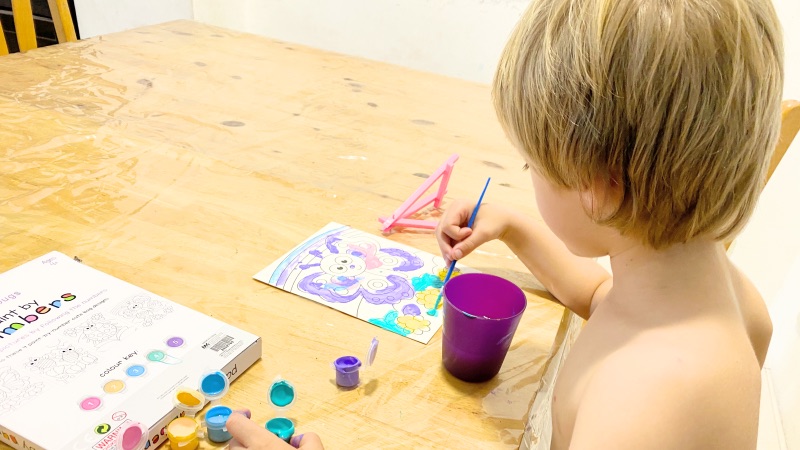
We have been consistently impressed and surprised by the amount of equipment and learning materials we have been able to buy as we travel. Travelling through Southeast Asia we have been able to find writing books, colouring books and maths books in every country (always in English). We have always been able to find the stationary that we need and we have also been able to find plenty of art and craft materials. In Asia it has been easy to find bits and pieces for science investigations from chemists and toy shops. So if you are planning to set off worldschooling, don’t worry if you don’t have everything in your backpack at the start of your trip. For us each of our boys has their own backpack with toys, books and worldschooling stuff. Things come and go allowing us to constantly progress and mix it up.
If you can’t get it – don’t sweat it

Worldschooling is all about learning through activities and experience. In some cases you may not be able to get your hands on the resources you need. For example, if your child is learning about science you may struggle to get your hands on experimental apparatus. What do you do? One approach might be to ask a school if your child can join an after school science class or have a look at a lab. Watch out for open days in schools. Science museums also tend to have experiments and investigations. You can also find simulations that help children observe and investigate even if they can’t get their hands on the real equipment. Ultimately, if your child misses out on one small bit of practical work, they gain a whole world of other unique and enriching experiences.
