
Table of Contents
If you’re looking for the best cooking classes in Bali you’ve come to the right place. In this article we will reveal the BEST places to take a cooking class in Bali in 2026. One of our favorite ways to connect with a new culture is to take a cooking class and learn about local food. There are so many cooking classes in Bali it can be quite hard to narrow it down.
So we are going to help you out with a few recommendations of THE BEST cooking classes in Bali.
Cooking classes typically allow you to cook several local Balinese dishes and then try the food at the end of the course. In generally cooking classes range between £15 – £25 and allow you to cook 5 – 10 dishes. They normally take half a day.
In this article we will compare prices, what’s included and overall experience to help you pick the BEST cooking classes. We will also help you work out what to expect and what should be included in a good cooking class in Bali.
Don’t miss our EPIC guide on THE BEST things to do in Bali
Summary of THE BEST Cooking classes in Bali
| Details | Class length | Price | |
| Subak Cooking Class | Located around 15km north of Ubud. Prepare 9 dishes. Also includes a welcome drink, market tour, paddy tour, recipes and pick up and drop off from the Ubud area. Book Subak on Klook | 5 hours | £16 or $20 |
| Ketut’s Cooking class Bali | Located 3km northeast of Ubud. Prepare and enjoy 8 dishes. Also includes market tour, pick up and drop off from Ubud area. Book Ketut’s class on Klook | 4 hours | £20 or $25 |
| Paon Bali cooking class | Located around 3km east of Ubud. Prepare 7 dishes in a traditional Bali house. Also includes market tour (morning classes only) a bintang beer with food and free hotel transfer from Ubud. | 5 hours | £20 or $25 |
| Cafe Wayan in Ubud | Located in Ubud town (Jalan Monkey Forest). This class is linked to a beautiful ornate cafe. Prepare 5 dishes in a beautiful garden. No need to pre-book classes, just turn up | 2 hours | £20 or $25 |
| Bali Farm Cooking School | Located 20km north of Ubud. Remote rural farm course. Prepare 6 dishes. Also includes market visit (morning classes only), organic farm tour and free transfer from Ubud. | 6.5 hours | £26 or $30 |
Map of the BEST cooking classes in Bali
Why take a cooking class in Bali?

Before we look at each of the best cooking classes in more detail, let’s talk about why you should take a cooking class in Bali. Taking a cooking class in Bali is a fun, unique and immersive experience. Here are a few reasons to take a cooking class in Bali:
- Learn about Balinese cuisine: Bali is known for its rich and flavorful cuisine, which combines local ingredients, herbs, and spices to create unique dishes. By taking a cooking class, you’ll have the opportunity to learn the secrets of Balinese cuisine from a local expert.
- Get hands-on experience: Cooking classes in Bali are a fun, engaging and hands-on experience. You’ll get to chop, mix, and cook the ingredients yourself. This is a great way to learn new techniques and develop your cooking skills to impress your friends.
- Visit local markets: Many cooking classes in Bali include a visit to a local market where you can buy fresh ingredients and learn more about Balinese culture. You’ll also get to see the local produce and spices that are used in Balinese cuisine. If this is something you’re interested in, make sure it’s included in your course.
- Connect with other travelers: Cooking classes in Bali are a great way to meet other travelers. Cooking classes tend to have a fun and sociable pace and finish with a meal. This is a great chance to meet new people and have a giggle.
- Take home new recipes: By the end of the class, you’ll have learned how to cook several Balinese dishes and will have the recipes to take home with you. You can impress your friends with your cooking skills and recreate the delicious flavors of Bali in your own kitchen. Many cooking schools actually include a recipe book.
The best cooking classes in Bali
1 Subak Cooking Class

Subak Cooking Class is one of the best value cooking classes in Bali. This class is run by Wayan and his family. They are very friendly and knowledgeable and run a lovely class. The Subak cooking class offers a lot for your money. In this fun and interactive class you get to prepare 9 dishes. They also include a welcome drink of ginger tea, a market tour, a rice paddy tour and a recipe booklet. The kitchen is large, spacious and there is enough equipment and stoves for everyone. There are also plenty of people to help you in this class.
The main disadvantage is that Subak Cooking school is located around 15km north of Ubud. This is around 30 minutes by road. They do include pick up and drop off from the Ubud area. Classes take around 5 hours and there are two classes per day at 8am and 2pm. Here are some dishes they commonly make at Subak: Soup Sayur Bali (Balinese vegetable soup), Ayam Santan Bumbu Bali (Balinese fried chicken with coconut milk), Sate Lilit Bali (Balinese chicken satay), Pepes Ayam (grilled and steamed chicken in banana leaf) and Klepon Cake (boiled circle sticky flour with palm sugar). They can also cater for special dietary requirements. Classes generally cost around £16 or $20 (300,000 IDR)
2 Ketut’s Cooking class Bali

Ketut’s cooking class is one of the best and most popular cooking classes in Bali. Ketut and his family run the cooking classes. Ketut is a fun and cheerful teacher who runs his classes with in depth knowledge and a great sense of humour. Ketut’s cooking class is in an excellent location only 3km northeast of Ubud. In the class you get to prepare plenty of food so be prepared to be stuffed by the end! The classes last around 4 hours and include loads of fascinating info and plenty of hands on experience.
This class also includes market tour, pick up and drop off from Ubud area. There are two classes per day at 8.30am and 3pm. On Ketut’s class you get to prepare and enjoy 8 dishes and he is able to cater for special dietary requirements. Although the menu may change a little, here are some dishes that you are likely to prepare at Ketut’s Cooking school: Soup Ayam (Chicken Soup), Ayam Bumbu Bali (Balinese Fried Chicken), Sate Ayam Sauce Kacang (Chicken Satay with Peanut Sauce) Pepes Ikan (Grilled Fish in Banana Leaf) and Mie Goreng (Fried Noodle). Classes generally cost around £20 or $25 (350,000 IDR)
3 Paon Bali cooking class

Paon cooking class offers an authentic and traditional cooking class in Baninese village. The school is named after the main teacher – Paon, who is a lovely, hilarious and very knowledgeable teacher. Paon cooking classes are fun, engaging and hands-on. What’s more, the Paon school is located around 3km east of Ubud – ideal if you’re staying in Ubud. And they also include free hotel transfer from Ubud. On the Paon cooking class you get to prepare 7 dishes in a traditional Bali house. This class also includes a market tour (morning classes only) and a bintang beer with your food at the end of the course. In this class you generally get to make dishes like sate, Balinese soup, fried noodles and Pepes Ikan. The Paon cooking class is a pretty average price for Bali generally costing around 350,000IDR (around £20 or $25)
4 Cafe Wayan in Ubud

Cafe Wayan in Ubud offers fun and engaging cooking classes in an ornate Balinese garden at the back of a cafe in central Ubud. The cafe Wayan cooking school offers a wide array of recipes. They tend to mix it up from day to day so you never really know what you’re going to get. The cooking classes at Cafe Wayan cost 350,000IDR per person (around £20 or $25). Classes take around 2 hours and include 4 or 5 dishes – with a chance to eat your culinary creations at the end. Classes at cafe Wayan start at 10am in the morning and 4pm in the afternoon. They need 2 people minimum to run course – no need to book in advance. You can just turn up on the day and join a class. They also offer private classes. Email for more information: cafewayanbali@gmail.com
5 Bali Farm cooking class
If you’re looking for an authentic rural cooking class in Bali then check out the Bali Farm cooking class. The class take around 6 or 7 hours and includes a tour of the organic farm, a visit to a local market and preparing 6 delicious dishes. This cooking class is located in the countryside around 20km north of Ubud. They include hotel pick up and drop off from Ubud. There are two classes per day. The morning class has an early start at 7.30am and the afternoon class starts at 12.30pm.
This is one of the more expensive cooking classes in Bali. The Bali farm cooking class costs 480,000IDR (around £26 or $30). They also offer Cook and stay packages and firefly watching tours. The Bali Farm cooking school offers meat lover, vegan and vegetarian classes. Dishes generally include: Sayur Urab (mix green salad with coconut and spice), Opor Ayam (Balinese Chicken curry), Sate Lilit (Traditional Balinese Kebab), Tuna Sambal Matah, Tempe Asam Manis (Sweet Sour fermented soya beans) and Pisang Goreng (Banana fritters with coconut and melted palm sugar)
What do you do in a typical cooking class in Bali

A typical cooking class in Bali usually starts with a visit to a local market where the teacher will introduce you to the various herbs, spices, and ingredients used in Balinese cooking. You may be given the opportunity to purchase fresh ingredients.
After the market visit, you will normally be taken to the cooking class venue. During the class, you will learn how to prepare several traditional Balinese dishes such as nasi goreng (fried rice), sate lilit (grilled minced meat on bamboo skewers), lawar (a salad made with vegetables and grated coconut), and sambal matah (a spicy condiment made with chili, shallots, and lemongrass).
The teacher will guide you through the cooking process step by step, explaining the techniques and methods used to achieve the desired flavors and textures. You will also have the opportunity to ask questions and receive feedback on their cooking throughout the class. Once your dishes are prepared, you get to sit down together and enjoy your culinary creations. This is a great opportunity to taste the dishes you have created and get to know other people in the class.
What things should be included in a good cooking class in Bali?
Good cooking classes in Bali should include:
- Two way hotel transfer
- A market visit
- Fresh ingredients
- Cooking equipment including your own stove
- Good student to teacher ratios (around 1 teacher or helper for 5 students is reasonable)
- A recipe book (may be a PDF or physical book)
- A meal enjoying the dishes you have made
- Good cooking courses may include other things like
Are cooking classes in Bali family friendly?

Cooking classes in Bali are family friendly. Actually this is a GREAT activity for families with kids. On a cooking class kids can learn new skills, have fun and learn more about Balinese culture and food. However, it is worth noting that cooking classes often require you to use sharp knives, stoves and hot pans. So, really this is not ideal for families with young children. Many of the cooking schools in Bali have a minimum age of 6 or 7 years old
Can cooking classes cater for special dietary requirements?
YES most cooking classes in Bali do offer options for special dietary requirements. Just drop them a message before you book to check whether they can cater for your requirements and then remind them before the class so that they can source the correct ingredients. Many cooking classes offer special menus for vegetarians, vegans and gluten free dishes.
What makes Bali cooking classes special?

Balinese food is similar to other Indonesian cuisines in some ways, but it has some distinct characteristics that set it apart. Here are some of the ways that Balinese food is different from typical Indonesian food:
- Use of local ingredients: Balinese cuisine relies heavily on locally sourced ingredients such as coconut, rice, pork, and fish. These ingredients are used in unique ways to create the flavors and textures that are distinct to Balinese cuisine.
- Use of spices and herbs: Balinese cuisine is known for its use of fragrant spices and herbs such as lemongrass, turmeric, and galangal. These ingredients are used to add depth and complexity to the dishes, resulting in a bold and flavorful cuisine.
- More emphasis on meat: Compared to other Indonesian cuisines, Balinese cuisine has a stronger emphasis on meat, particularly pork. Many Balinese dishes feature pork in various forms, such as grilled, minced, or slow-cooked in spices.
- Unique preparation methods: Balinese cuisine has several unique preparation methods, such as wrapping meat and vegetables in banana leaves and cooking them over hot coals, or using a stone mortar and pestle to grind spices and herbs.
- Influence of Hindu culture: Balinese cuisine has been influenced by the island’s Hindu culture, which has a strong influence on the use of spices and herbs, as well as the preparation and presentation of food.
Overall, Balinese cuisine has a unique blend of flavors, spices, and ingredients that make it distinct from other Indonesian cuisines. It is a must-try for foodies looking to explore the diverse and delicious world of Indonesian cuisine.
What fresh spices might you use on a Bali cooking class?

Bali is known for its rich and diverse agricultural landscape, and there are many fresh spices that grow on the island. Here are some examples:
- Turmeric: A bright yellow spice that is commonly used in Balinese cooking. It has a slightly bitter, earthy taste and is often used to flavor rice dishes, curries, and sambal.
- Lemongrass: A fragrant herb with a lemony aroma that is often used in soups, curries, and marinades. It is also used to make tea.
- Galangal: A member of the ginger family that has a pungent, peppery flavor. It is often used in soups, curries, and stir-fries.
- Kaffir Lime Leaves: These aromatic leaves are used to flavor soups, curries, and stir-fries. They have a distinct citrus flavor and are often used in combination with lemongrass and galangal.
- Tamarind: A sour fruit that is used to add a tangy flavor to dishes. It is often used in soups, stews, and curries.
- Shallots: A member of the onion family that has a milder flavor than onions. They are often used in sambal, curries, and stir-fries.
- Chili Peppers: Bali is known for its spicy cuisine, and chili peppers are a common ingredient in many dishes. They are used to add heat and flavor to curries, sambal, and other spicy dishes.
What cooking techniques are you likely to learn on a Balinese cooking class?
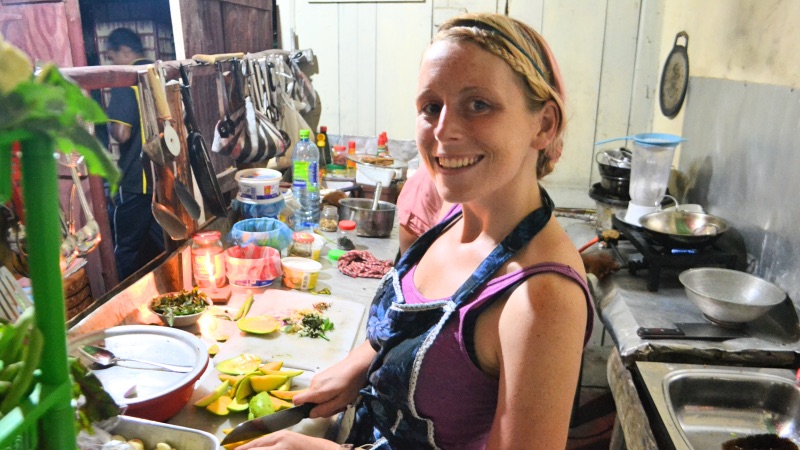
Balinese cuisine is characterized by its vibrant flavors and a diverse range of cooking techniques. Here are some common Balinese cooking techniques:
Grilling: Grilling over an open flame is a popular cooking technique in Bali. It is often used for dishes such as sate lilit (minced meat skewers) and ikan bakar (grilled fish).
Boiling: Boiling is a common technique for making broths and soups, such as sayur urap (vegetable soup) and soto ayam (chicken soup).
Steaming: Steaming is used to cook rice and other dishes, such as pepes ikan (steamed fish wrapped in banana leaves).
Stir-frying: Stir-frying is a common technique for cooking vegetables and meat dishes quickly over high heat. It is used for dishes such as nasi goreng (fried rice) and cap cay (stir-fried vegetables).
Roasting: Roasting is used for dishes such as babi guling (roast suckling pig) and bebek betutu (roast duck), which are marinated in a blend of spices and roasted until tender and flavorful.
Balinese Spice Paste (Basa Genap): The technique of pounding and grinding fresh herbs, spices, and other aromatics into a paste is a hallmark of Balinese cuisine. The paste, called Basa Genap, is then used as the base for many dishes, including curries and soups.
Smoking: Smoking is a technique used for dishes such as smoked duck and fish, which are marinated in spices and then smoked over a low fire to infuse them with a smoky flavor.
